Lost in the Wild Beauty of Antalya’s Hidden Valleys
Have you ever stood somewhere so breathtaking it made you forget your phone even existed? That’s exactly what happened when I stepped into Antalya’s untouched landscapes. Far beyond the resort-lined beaches, I discovered lush canyons, whispering pine forests, and turquoise rivers that felt like nature’s own secret. This isn’t just a getaway—it’s a soul reset, one mountain trail and hidden waterfall at a time. Antalya, often celebrated for its sun-kissed coast and ancient harbor, holds within its rugged interior a wilder, quieter truth: a land shaped by time, water, and silence. For travelers willing to veer off the beaten path, these hidden valleys offer not only beauty but transformation.
Arrival: Beyond the Postcard – My First Glimpse of Real Antalya
Most visitors to Antalya follow a familiar path: arrival at the airport, transfer to a seaside resort, and days spent under parasols with the Mediterranean shimmering nearby. It’s a delightful experience, no doubt, but it only brushes the surface of what this region offers. I chose a different route—within an hour of leaving the city, I turned inland, climbing into the embrace of the Taurus Mountains. The change was immediate. The salty sea air gave way to crisp, pine-scented breezes. The rhythmic crash of waves was replaced by the rustle of leaves and the occasional cry of a distant bird. The pace slowed, not by design but by nature’s own rhythm.
Antalya’s coastline is undeniably beautiful, but its soul resides in the highlands and deep valleys carved by millennia of water and wind. As I drove higher, the landscape unfolded like a living map—steep ridges cloaked in green, terraced hillsides dotted with small farms, and narrow roads that wound like ribbons through the folds of the earth. This is a region where nature hasn’t been tamed, only respectfully shared. The contrast between the coastal tourist hubs and the mountain interior is not just geographical—it’s philosophical. One offers comfort and ease; the other, discovery and depth.
What surprised me most was how accessible this wild beauty is. A short drive from the bustling marinas of Kemer or the historic streets of Kaleiçi, and you’re in a world where cell service fades and the horizon is defined by peaks rather than hotels. There’s a humbling simplicity here—a reminder that not every destination needs to be curated for mass appeal. For families, couples, or solo travelers seeking authenticity, Antalya’s interior valleys offer a rare chance to reconnect with the raw pulse of the earth.
Saklıkent Canyon: Walking Through a Natural Sculpture
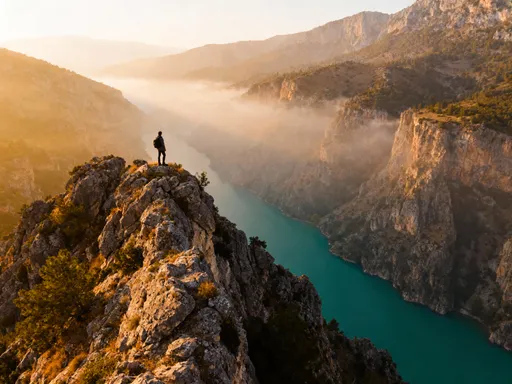
If Antalya’s mountains are its bones, then Saklıkent Canyon is its spine—a deep, narrow rift carved through limestone over countless centuries. At over 18 kilometers long and with walls rising more than 100 meters in places, it’s one of Turkey’s most dramatic geological formations. My journey into the canyon began with the crunch of gravel underfoot and the cool rush of air that greeted me at the entrance. Within moments, I was walking through water, ankle-deep in a stream fed by snowmelt from distant peaks. The river, clear and icy, flows steadily through the canyon floor, inviting bare feet and quiet contemplation.
The experience of moving through Saklıkent is unlike any typical hike. It’s immersive. The walls close in, sometimes narrowing to just a few meters across, casting deep shadows even at midday. Sunlight filters in like liquid gold, touching the rock in fleeting patches. The sound is muffled—your footsteps splash softly, and voices echo like whispers from another time. It’s easy to imagine this place as a sanctuary, a hidden corridor known only to shepherds and mountain goats. And yet, it’s open to anyone willing to come prepared.
Proper gear is essential. Waterproof shoes with good grip are not optional—they’re the difference between a smooth journey and a slippery struggle. The path is unmarked in parts, and the riverbed is uneven, with loose stones and sudden drops. But the effort is worth it. Along the way, small side passages hint at even deeper secrets, and the occasional wooden footbridge offers a dry crossing. After about two kilometers, the canyon opens slightly, revealing a small café built into the rock—a humble reward for those who’ve braved the chill.
What makes Saklıkent remarkable isn’t just its scale, but its natural climate control. In summer, when coastal temperatures soar above 35°C, the canyon remains refreshingly cool, rarely exceeding 18°C. This makes it not only a scenic destination but a functional retreat from the heat. Families with children often visit in the morning, letting kids splash in the shallows while adults rest on shaded benches. For photographers and nature lovers, the interplay of light, water, and stone offers endless inspiration. Saklıkent is a reminder that nature’s artistry often requires no embellishment—just presence.
The Magic of Köprülü Canyon and the Rafting Surprise
I hadn’t planned on white-water rafting. The idea of strapping on a helmet and navigating rapids felt more suited to adventure magazines than my personal travel style. But the emerald waters of the Köprüçay River, flowing through the heart of Köprülü Canyon National Park, had a persuasive quality. Nestled within a protected forest area, this river valley is a haven of biodiversity and natural beauty. And the rafting experience, I quickly learned, is designed not just for thrill-seekers but for anyone open to a joyful, safe, and deeply scenic adventure.
Our group was outfitted with life jackets, helmets, and paddles by a team of licensed local guides—professionals with years of experience on these waters. Safety briefings were thorough, and the tone was encouraging, not intimidating. As we pushed off from the riverbank, the current took us gently at first, winding through calm stretches flanked by dense pine forests. The water was clear enough to see rocks below, and the air carried the scent of damp earth and wild herbs. Then, the first rapid arrived—a sudden rush of whitewater that sent laughter echoing off the canyon walls.
The rapids range from mild to moderate, making the journey accessible to beginners while still offering excitement. What struck me most was the balance between adrenaline and serenity. Between bursts of paddling, there were long stretches of calm where we could simply float, look up at the cliffs, and absorb the silence. Along the banks, ancient Lycian ruins peek through the trees—a temple foundation here, a carved tomb there—silent witnesses to a civilization that once thrived in this rugged landscape.
The entire rafting route covers about 14 kilometers and takes roughly two to three hours, depending on water levels and group pace. Along the way, guides point out bird species, explain the geology of the canyon, and share stories of the region’s history. The experience is as educational as it is exhilarating. At the end, a riverside picnic awaits—grilled fish, fresh bread, tomatoes still warm from the sun, and sweet tea served in small glasses. It’s a celebration of nature, effort, and community.
Köprülü Canyon is more than a rafting destination; it’s a symbol of how adventure and conservation can coexist. The park is carefully managed to protect its ecosystems, with strict limits on group sizes and environmental impact. Visitors are encouraged to leave no trace, and operators follow sustainable practices. This commitment ensures that future generations will also be able to float down these emerald waters, surrounded by the same untouched beauty that inspires awe today.
Mount Tahtalı: A Sky-High Perspective from the Olympos Cable Car
Sometimes, the best way to understand a landscape is to rise above it. That’s the promise of the Olympos Cable Car, which ascends over 2,300 meters from sea level to the summit of Mount Tahtalı in just ten minutes. What could feel like a mere tourist attraction is, in fact, a journey through ecological zones—a vertical passage from Mediterranean coast to alpine heights. As the cabin lifts off the ground, the world below shrinks: first the pine forests, then the coastline, and finally, the vast blue sweep of the Mediterranean Sea.
The transformation is breathtaking. At the base, the air is warm and thick with the scent of wild thyme and oleander. At the summit, it’s crisp and thin, carrying the clean, sharp fragrance of juniper and stone. The temperature drops by as much as 20 degrees Celsius, a welcome relief in summer. The panoramic view from the top is nothing short of majestic—rolling hills, deep valleys, distant peaks, and the glittering curve of the coast stretching into the horizon. On clear days, you can see over 100 kilometers in every direction.
But the summit is more than a viewpoint. It’s a place of reflection. Standing at the edge of the observation deck, I felt a shift—not just in altitude, but in perspective. The concerns that had weighed on me before the ride—emails, schedules, to-do lists—seemed to dissolve in the vastness. There’s a humbling clarity that comes with elevation, a reminder of how small we are in the grand scheme of things. Yet, paradoxically, there’s also a sense of connection—to the earth, to the sky, to something greater than ourselves.
The cable car operates year-round, and the summit facilities include a café, restrooms, and informative displays about the region’s geology and wildlife. In winter, light snowfall occasionally dusts the peak, creating a rare Mediterranean alpine scene. For families, the ride is both educational and awe-inspiring, offering children a tangible sense of how landscapes change with height. For photographers, the lighting at sunrise and sunset turns the entire region into a canvas of gold and shadow.
Mount Tahtalı is not just a destination; it’s a revelation. It teaches us that beauty is not only found in the details—the curve of a leaf, the ripple of a stream—but also in the grand design of mountains, seas, and skies. And sometimes, all it takes is a few minutes in a glass cabin to shift our entire worldview.
Hidden Waterfalls and Secret Trails: Finding Serenity in the Mountains
While the canyons and cable cars draw well-deserved attention, some of Antalya’s most magical moments are found off the official map. During a quiet morning hike near the village of Uçhisar, I stumbled upon a hidden cascade—water tumbling over moss-covered rocks into a clear pool below. There were no signs, no crowds, not even a proper trail. Just the sound of falling water and the cool mist rising into the air. This was the upper reach of Düden Waterfalls, far from the tourist-frequented lower cascade that plunges dramatically into the sea.
These secret spots are not advertised in guidebooks, but they are known to locals—shepherds, farmers, and village elders who have walked these hills for generations. With a little curiosity and a good pair of hiking shoes, travelers can discover forest springs, secluded clearings, and quiet glades where time seems to pause. One such trail, starting from the village of Çamlar, leads through a canopy of pine and cedar to a series of small waterfalls tucked into a rocky ravine. The path is unmarked, but local families often picnic here on weekends, spreading blankets on flat stones and sharing food under the trees.
What makes these places special is their authenticity. There are no entrance fees, no souvenir stalls, no loudspeakers announcing tour times. Just nature, unchanged and unbothered. The water is safe to drink—filtered through layers of rock and forest—and the air carries the scent of damp moss and wild mint. Birds flit between branches, and dragonflies hover over the pools. It’s a world governed by natural rhythms, not schedules.
For travelers seeking peace, these hidden trails offer a form of slow tourism—a deliberate, mindful way of moving through the landscape. It’s not about checking off sights, but about being present. Sitting by a quiet stream, watching sunlight dance on the water, or simply breathing deeply in a cool forest glade—these are the moments that stay with you long after the trip ends. They remind us that the best travel experiences are often the simplest, the ones that require no tickets, only attention.
The Flora and Fauna That Stole My Attention
Antalya’s natural richness extends far beyond its dramatic scenery. The region is a biodiversity hotspot, where Mediterranean, continental, and mountain climates converge to support a wide variety of plant and animal life. As I hiked through different elevations, I noticed distinct shifts in vegetation—from olive groves and prickly pear cacti at lower levels to dense pine forests and alpine meadows higher up. In spring, the hillsides explode with color: red anemones, purple crocuses, and bright yellow daffodils blanket the slopes like a living tapestry.
One morning, while walking near the edge of a cliff, I spotted a pair of golden eagles circling high above the canyon. Their wingspan was immense, their flight effortless. These majestic birds are a protected species, and seeing them in the wild was a rare privilege. Other wildlife includes wild boar, roe deer, and the elusive Anatolian leopard, though the latter is rarely seen. More commonly observed are foxes, hedgehogs, and a variety of reptiles, including the impressive Caspian whipsnake.
The plant life is equally fascinating. Endemic species like the Antalya carnation and the Taurus violet grow in rocky crevices, adapted to the harsh sun and thin soil. Juniper forests, some of the oldest in the region, provide shelter for birds and small mammals. In spring, almond trees bloom in delicate pink and white, a tradition celebrated in local festivals. Beekeepers in the highlands harvest wild thyme honey, renowned for its rich flavor and medicinal properties.
What struck me most was how alive the landscape felt. Every rustle in the underbrush, every birdcall, every scent on the wind was a reminder that this is not a static backdrop, but a dynamic, interconnected system. Conservation efforts are ongoing, with national parks and protected areas helping to preserve these fragile ecosystems. Travelers are encouraged to stay on marked paths, avoid picking plants, and respect wildlife habitats. By doing so, we help ensure that Antalya’s natural treasures remain vibrant for generations to come.
Leaving with More Than Photos: Why Antalya’s Nature Changes You
I came to Antalya expecting beauty. I left with something deeper—a sense of renewal. The kind of clarity that comes not from scrolling through feeds, but from standing at the edge of a canyon, listening to the wind. The physical reawakening of walking trails that challenge your legs and clear your mind. The quiet joy of discovering a hidden waterfall, untouched by crowds. These experiences didn’t just fill my camera roll; they reshaped my perspective.
There’s a profound difference between seeing a place and feeling it. Resorts offer comfort, but wild landscapes offer transformation. In the silence of the mountains, I found space to breathe, to reflect, to remember what matters. The scale of the canyons, the height of the peaks, the endless blue of the sea—they put daily worries into perspective. Nature, in its vastness, has a way of quieting the noise within us.
Antalya’s hidden valleys are not just destinations; they are invitations. Invitations to slow down, to wander off the map, to reconnect with the earth and with ourselves. They remind us that travel can be more than sightseeing—it can be soul-searching. For families, it’s a chance to create shared memories away from screens. For individuals, it’s an opportunity to rediscover stillness. And for all of us, it’s a reminder that the most beautiful places are often the ones that ask nothing of us but our presence.
So when you plan your next journey to Antalya, consider this: go beyond the beach. Let the mountains call you. Follow the rivers into the wild. Because sometimes, the most unforgettable destinations aren’t the ones you see in brochures—they’re the ones that change you from the inside out.