You Won’t Believe How Valletta’s Architecture Steals the Show
Walking through Valletta feels like stepping into a 16th-century masterpiece that never stopped evolving. The city’s limestone buildings glow golden in the Mediterranean sun, each street revealing layers of history carved in baroque curves and fortressed walls. I didn’t expect architecture to move me this way—until I saw how form, function, and faith blend seamlessly here. This isn’t just sightseeing; it’s understanding how a small island built a monumental identity stone by stone.
First Impressions: The City Built on Stone and Strategy
Valletta stands as a testament to human resilience and visionary planning, rising from the ashes of conflict with purpose and precision. Founded in 1566 by the Knights of St. John following the Great Siege of Malta, the city was conceived not merely as a refuge but as a fortress-capital capable of repelling future Ottoman invasions. Its location atop the Sciberras Peninsula offered strategic dominance over the Grand Harbour, and the Knights wasted no time transforming this narrow ridge into a bulwark of Christian Europe. What makes Valletta remarkable from its inception is the sophistication of its urban design—engineered by military architect Francesco Laparelli under the direction of Grand Master Jean Parisot de Valette, after whom the city is named. The grid layout, inspired by Renaissance ideals of order and symmetry, was revolutionary for its time, particularly in a region where medieval organic growth had long defined cityscapes.
This structured approach was not only aesthetically ambitious but deeply functional. Wide, straight streets allowed for rapid troop movement and unobstructed lines of sight, essential during wartime. Yet these same avenues now serve pedestrians with ease, making Valletta unusually navigable for a historic European capital. Buildings were constructed close together, forming continuous façades that reinforced the city's defensive integrity while maximizing limited space. At every turn, one senses the balance between military necessity and civic ambition—the thick limestone walls that shielded against cannon fire also provided thermal insulation and acoustic dampening, benefits still appreciated by residents today.
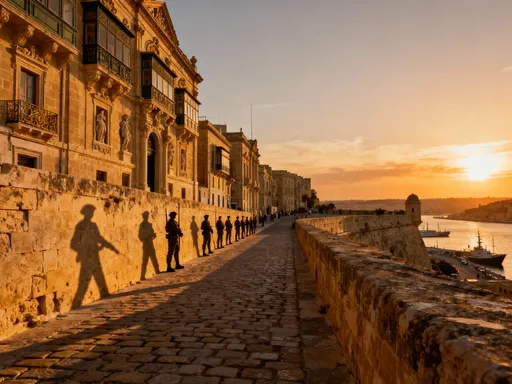
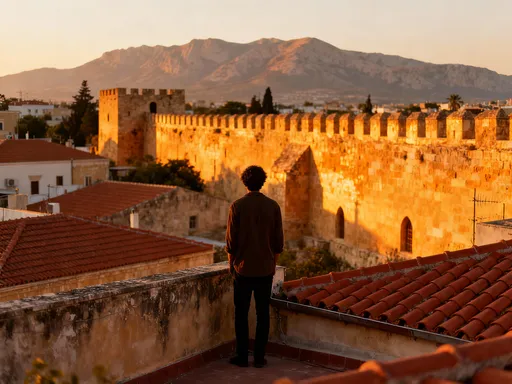
The defining feature of Valletta’s visual identity is its use of local Globigerina Limestone, a soft, honey-colored stone quarried across Malta. When freshly cut, it appears pale gold, deepening to a rich amber with age and exposure to sunlight. This material gives the entire city a warm, unified glow, especially at dawn and dusk when the low-angled Mediterranean light bathes the façades in a radiant hue. Early builders recognized its workability—ideal for intricate carving—while also valuing its abundance and durability. Over centuries, this stone has become synonymous with Maltese architecture, shaping not just Valletta’s skyline but its soul. Even today, Maltese law requires new constructions within the city to use this native limestone, preserving the architectural harmony established over 450 years ago.
What sets Valletta apart from other fortified cities is how seamlessly defense and dignity coexist. Unlike grim citadels built solely for survival, Valletta was designed to impress—to project power, piety, and permanence. Bastions were adorned with classical motifs, gates inscribed with Latin mottos, and public squares laid out with geometric precision. From the very beginning, the city was meant to be both impregnable and inspiring. That duality remains palpable: visitors feel the weight of history not through ruin or decay, but through enduring strength and elegance. In Valletta, security did not come at the expense of beauty; rather, beauty was a component of security—a declaration that civilization could thrive even on the front lines of conflict.
Baroque Everywhere: When Drama Met Devotion
If Valletta’s streets speak of military genius, its interiors whisper—or more accurately, shout—of spiritual passion. The 17th and 18th centuries saw an explosion of Baroque architecture across the city, driven by the Catholic Counter-Reformation and the Knights’ desire to reaffirm their religious mission. This was not decoration for decoration’s sake; it was theology rendered in marble, gold, and paint. The Baroque style, with its dramatic contrasts, emotional intensity, and overwhelming richness, served as a tool of persuasion and devotion—a way to captivate the senses and elevate the soul. Nowhere is this more evident than in St. John’s Co-Cathedral, the spiritual heart of Valletta and one of the most extraordinary religious buildings in the Mediterranean.
Externally, the cathedral presents a restrained, almost austere façade—typical of the Knights’ vow of humility and their focus on collective identity over individual glorification. But step inside, and the effect is nothing short of transformative. The nave and side chapels explode with color, gilding, and sculptural detail. Every surface seems to pulse with life: vaulted ceilings depict scenes from the life of St. John the Baptist in vivid frescoes by Mattia Preti; walls are lined with marble tombstones embedded with the effigies of Knights; altars shimmer under layers of gold leaf. The Oratory, dedicated to the Beheading of St. John, houses Caravaggio’s masterpiece *The Beheading of Saint John the Baptist*, a painting of such raw power that it commands silence even in a room filled with opulence. Here, art and faith converge in a space designed to overwhelm and inspire.
What makes Baroque architecture in Valletta so compelling is its intentionality. Each curve, column, and ceiling panel was crafted to guide the worshipper’s gaze upward, toward the divine. Light filters through high windows, illuminating gilded details like halos around sacred figures. Illusionistic painting creates false domes and open skies, dissolving the boundaries between earthly and heavenly realms. This was architecture as theater, where the faithful were both audience and participant in a sacred drama. Even smaller churches throughout the city—such as the Church of the Jesuits or St. Paul’s Shipwreck—embrace this aesthetic, ensuring that no corner of Valletta remains untouched by Baroque expression.
Yet beyond spectacle, there is meaning. The Knights used Baroque design to communicate their values: discipline, sacrifice, and eternal vigilance. Their chapels were not only places of prayer but memorials to fallen brothers and declarations of enduring faith. The lavishness was never frivolous—it was a response to the fragility of life in a contested land. In a city born from siege and sustained by vigilance, beauty became a form of resistance, a way of asserting that culture and spirituality could endure even in the shadow of war. Today, these spaces continue to serve both tourists and locals, hosting regular services alongside cultural events, proving that Baroque architecture in Valletta is not a relic but a living tradition.
Fortifications That Define a Capital
Valletta’s skyline is shaped as much by its defensive walls as by its churches and palaces. Rising from the sea on all sides, the city is encircled by massive bastions, deep ditches, and fortified gates—structures so integral to its identity that they are not merely remnants of the past but active participants in the present-day experience. These fortifications were not afterthoughts; they were the foundation upon which the entire city was built. Designed according to the latest military engineering principles of the 16th century, Valletta’s defenses employed the star-shaped bastion system, which eliminated blind spots and allowed defenders to fire at attackers from multiple angles. This innovation made direct assaults nearly impossible and ensured that Valletta would never fall to siege again after the trauma of 1565.
The scale of these defenses is staggering. The walls stretch over three kilometers, reaching heights of up to 15 meters in some sections, with sloped bases designed to deflect cannonballs. Key bastions—such as St. Peter & St. Paul, St. John, and St. Michael—anchor the city’s perimeter, each named after the patron saints of the respective langues (national divisions) of the Knights. The surrounding ditch, once a lethal obstacle filled with sharpened stakes, now serves as a green buffer zone and pedestrian passage, though its original depth and width still convey the seriousness of its former purpose. Even the city gates—originally built for controlled access and defense—have evolved over time, with the current City Gate designed by Renzo Piano reflecting both modern function and historical respect.
What many visitors don’t immediately realize is how deeply military logic influenced civilian life in Valletta. Street widths were determined by artillery lines of fire; building heights were regulated to avoid obstructing surveillance from the ramparts; public squares were positioned to allow for troop assembly and supply distribution. Even the placement of wells and cisterns was strategic, ensuring water access during prolonged sieges. This fusion of military and urban planning created a city that was not only defensible but efficient—a rare example of form following function in ways that benefited both war and peace.
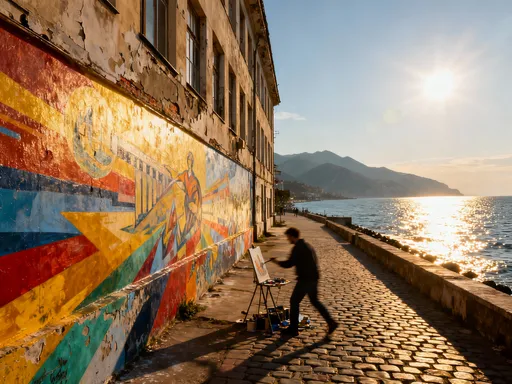
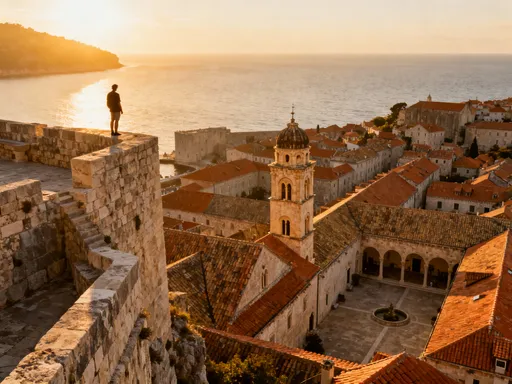
Today, walking the ramparts offers one of the most rewarding experiences in Valletta. From these elevated paths, visitors enjoy panoramic views of the Grand Harbour, the Three Cities, and the modern skyline beyond. What were once vantage points for spotting enemy fleets are now observation decks for appreciating natural beauty and human achievement. The contrast is striking: where sentries once scanned the horizon for danger, families now picnic at sunset, couples take photos, and artists sketch the play of light on water. Yet the sense of vigilance lingers—in the solidity of the stone, the precision of the angles, the silence between cannon emplacements. These walls are not just barriers; they are storytellers, reminding us that safety, too, can be beautifully engineered.
Hidden Layers: Where Grandeur Meets Everyday Life
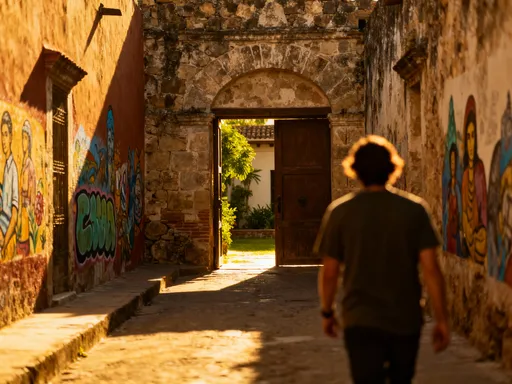
Beyond the grand façades and monumental spaces lies another Valletta—one of quiet courtyards, family-run shops, and laundry fluttering from wrought-iron balconies. This is the city as lived, not just admired. Behind the uniform limestone exteriors, many buildings conceal intimate interior worlds: private gardens, tiled floors, and shaded patios where generations have gathered for meals, conversations, and celebrations. These hidden spaces reveal a different kind of architectural brilliance—one that prioritizes comfort, privacy, and continuity. While tourists marvel at the city’s public splendor, locals cherish its domestic soul, where history is not displayed behind glass but woven into daily routines.
One of the most distinctive features of Maltese domestic architecture is the enclosed wooden balcony, known locally as a *gallarija*. These box-like structures, often painted in bright blues, greens, or reds, project from upper-floor windows and are fitted with glass panes or louvered shutters. Originating in the 17th century, they allowed residents to enjoy fresh air and sunlight while maintaining modesty and protection from the elements. Over time, they became symbols of personal expression—each uniquely decorated with plants, lace curtains, or family heirlooms. Though not exclusive to Valletta, their prevalence here adds texture and warmth to the otherwise formal streetscape. In recent years, efforts to preserve these balconies have intensified, recognizing them not just as architectural quirks but as cultural artifacts worth protecting.
Living in a UNESCO World Heritage city comes with challenges. Strict conservation laws govern renovations, limiting changes to windows, roofing materials, and façade treatments. While these regulations ensure architectural integrity, they can make modernization difficult—particularly when it comes to insulation, plumbing, or accessibility upgrades. Nevertheless, many residents take pride in stewarding their homes, often investing in careful restorations that honor the past while accommodating contemporary needs. Some have converted old townhouses into boutique guesthouses or artisan studios, blending heritage with hospitality. Community-led initiatives, such as the Valletta Rehabilitation Project, have supported low-income homeowners in repairing roofs and facades, reinforcing the idea that preservation is a shared responsibility.
This balance between reverence and realism defines Valletta’s character. It is not a museum frozen in time, but a working city where people raise children, run businesses, and age in place. The fact that so much historic fabric remains intact is due not only to government policy but to the attachment locals feel toward their surroundings. They understand that the beauty of Valletta lies not just in its monuments but in the continuity of life within them. When an elderly woman waters geraniums on her *gallarija*, or a carpenter restores a 19th-century door frame by hand, they are not merely maintaining buildings—they are sustaining a way of life.
Public Spaces Designed for People, Not Just Pageantry
At the heart of Valletta’s appeal are its public squares—open, human-scaled spaces where community life unfolds naturally. Unlike grandiose plazas designed solely for ceremony, Valletta’s piazzas invite lingering. City Gate Square, once a barren approach to the capital, has been reimagined as a welcoming entrance with shaded walkways, native planting, and tiered seating that encourages rest and conversation. Nearby, St. George’s Square—officially known as Palace Square—serves as the political and social nucleus of the city, fronted by the Grandmaster’s Palace and surrounded by cafés, flower stalls, and musicians. These spaces are not static; they pulse with activity from morning to evening, serving as venues for markets, festivals, and spontaneous gatherings.
The design of these squares reflects an intuitive understanding of urban comfort. Buildings rise to moderate heights, creating a sense of enclosure without oppression. Arcades provide shelter from sun and rain, while stone benches and fountains offer places to sit and reflect. Trees are carefully positioned to cast dappled shade, and paving materials are chosen for their thermal properties, staying cooler underfoot during summer months. Even the scale of doorways and windows has been calibrated to create visual rhythm and intimacy. All of these elements work together to make Valletta feel walkable, safe, and inviting—a city designed for people, not just monuments.
Over time, these spaces have evolved in function while retaining their essence. St. George’s Square, once reserved for military parades and state functions, now hosts farmers’ markets, outdoor film screenings, and seasonal ice rinks. The integration of modern interventions—such as Renzo Piano’s redesign of City Gate and the open-air performance space within the ruins of the former opera house—demonstrates a thoughtful approach to urban renewal. Rather than erasing the past, these projects enhance it, creating dialogue between old and new. The exposed limestone walls of the ancient fortifications stand alongside sleek metal canopies, illustrating that heritage and innovation need not be opposites.
For residents, these public spaces are more than aesthetic assets—they are extensions of home. Parents bring toddlers to playgrounds tucked within historic courtyards; retirees play chess under olive trees; students gather with textbooks in quiet corners. The accessibility of these areas fosters inclusivity, allowing people from all walks of life to share the same ground. In a world where many cities prioritize cars over pedestrians or commercial development over communal space, Valletta offers a counterexample: a dense, historic environment that still puts people first. Its squares are not afterthoughts but the very organs of civic life, pumping energy, connection, and joy through the city’s veins.
Materials and Climate: Building Smart in the Mediterranean Sun
The genius of Valletta’s architecture is not only in its appearance but in its intelligence—its ability to respond to environmental conditions with centuries-old wisdom. Central to this is the use of Globigerina Limestone, a sedimentary rock formed over millions of years from fossilized marine microorganisms. This material, abundant across Malta, possesses exceptional thermal properties: it absorbs heat slowly during the day and releases it gradually at night, helping to regulate indoor temperatures. Combined with thick walls—often exceeding one meter in depth—this natural insulation keeps interiors cool in summer and warm in winter, reducing reliance on artificial heating and cooling systems.
Architectural adaptations extend beyond materials. High ceilings promote air circulation, allowing hot air to rise while cooler air settles at floor level. Internal courtyards, common in both palaces and modest homes, act as thermal chimneys, drawing in breezes and providing shaded outdoor rooms for cooking, dining, or relaxation. Windows are often small and strategically placed to minimize direct sunlight while maximizing ventilation, and many buildings are oriented to catch prevailing northerly winds. These passive design strategies, developed long before the advent of modern HVAC technology, reflect a deep understanding of climate-responsive building—a knowledge that remains relevant today.
Yet the same qualities that make limestone ideal for construction also make it vulnerable. Over time, exposure to salt-laden sea air, rainfall, and pollution leads to erosion, discoloration, and structural weakening. In some areas, façades show signs of pitting or flaking, particularly on seaward-facing walls. Restoration efforts require skilled craftsmanship and compatible materials to avoid damaging original surfaces. Traditional techniques—such as repointing with lime-based mortar rather than cement—are essential for preserving breathability and preventing moisture trapping. Organizations like Heritage Malta and Din l-Art Ħelwa (The National Trust of Malta) play crucial roles in monitoring and maintaining the city’s fabric, often training new generations of stonemasons in time-honored methods.
Despite these challenges, there is growing recognition of Valletta’s sustainable legacy. Architects and urban planners now look to its passive cooling strategies, compact layout, and pedestrian orientation as models for climate-adaptive design. New developments within and around the city increasingly incorporate green roofs, solar shading, and rainwater harvesting, blending tradition with innovation. In this way, Valletta is not just a repository of the past but a laboratory for the future—a place where ancient materials and modern science collaborate to create resilient, livable spaces in an era of environmental change.
Why Valletta’s Architecture Still Matters Today
Valletta’s enduring significance lies in its ability to be both timeless and timely. As a UNESCO World Heritage Site since 1980, it is recognized as a masterpiece of human creative genius—a city where every building, street, and square tells a story of survival, faith, and ingenuity. Yet its value extends beyond cultural prestige. The preservation and celebration of its architecture contribute directly to Malta’s economy, supporting thousands of jobs in tourism, hospitality, conservation, and the arts. Visitors come not only to see landmarks but to feel the atmosphere—to walk where history happened, to touch walls that have stood for centuries, to experience the harmony of a city built with intention.
More importantly, Valletta offers lessons in resilience and identity. In an age of rapid urbanization and homogenized architecture, it stands as a reminder that places can have character, memory, and meaning. Its buildings are not interchangeable glass towers but unique expressions of a shared past, shaped by geography, belief, and necessity. For travelers, especially women between 30 and 55 who often juggle family, work, and personal growth, Valletta presents a quiet inspiration—a model of strength cloaked in grace, of purpose woven into beauty. It shows that enduring value comes not from speed or scale, but from care, continuity, and connection.
The city also exemplifies how heritage can be dynamic rather than static. Through thoughtful restoration, adaptive reuse, and community engagement, Valletta continues to evolve without losing its soul. Old warehouses become art galleries; convents transform into cultural centers; rooftop terraces host open-air concerts. This spirit of reinvention ensures that the city remains relevant to younger generations while honoring those who came before. It proves that preservation is not about freezing a moment in time, but about enabling history to participate in the present.
As the sun sets over the Grand Harbour and the limestone façades rekindle their golden glow, one realizes that Valletta is more than a destination—it is a dialogue between centuries. Every stone carries a whisper of the past, every alleyway opens onto a possibility for the future. To walk its streets is to witness how architecture, when rooted in purpose and sustained by pride, can elevate the human spirit. Valletta does not merely steal the show—it redefines what a city can be: fortified yet open, ancient yet alive, monumental yet intimate. And in that balance, it offers a vision worth carrying home.