You Gotta See These Jeju Cityscapes — Totally Unexpected Magic
I didn’t expect to fall in love with Jeju’s cityscapes — I went for the lava tubes and coastal cliffs, but what really blew my mind was the urban beauty hiding in plain sight. From misty dawn shots in Jeju City to neon-lit alleyways in Seogwipo, the island’s skyline blends nature and modern life in ways I never imagined. These aren’t just background photos — they’re stories in every frame. Let me take you through the spots that made me stop, stare, and shoot nonstop.
Why Jeju’s Urban Views Surprise Most Travelers
Most visitors arrive on Jeju Island with one goal: to hike Hallasan, explore the lava caves, or walk along the dramatic southern coast. The island's natural wonders are rightly celebrated, drawing travelers from across Korea and beyond. Yet in the pursuit of volcanic peaks and ocean trails, many overlook the quieter, equally compelling beauty found in its towns. The cityscapes of Jeju City and Seogwipo offer a rare harmony — where mountain silhouettes frame apartment blocks, fishing boats bob beneath city bridges, and morning light spills over tiled rooftops with Hallasan watching in the distance.
This unexpected blend of nature and urban rhythm creates visual poetry. Unlike crowded metropolises, Jeju’s cities breathe. They don’t overpower the landscape; they nestle into it. The contrast between wild volcanic rock and orderly streets, between ocean mist and glowing convenience stores, produces compositions that feel both grounded and dreamlike. For photographers and mindful travelers alike, these juxtapositions are a gift — a reminder that beauty isn’t confined to national parks or tourist hotspots.
The realization often comes gradually. You might wake early for a sunrise at Seongsan Ilchulbong, then pass through a quiet neighborhood where laundry flutters between buildings and a convenience store clerk waves hello. That moment — ordinary, unposed — can linger longer than any postcard vista. The island’s urban scenes are not distractions from nature; they are part of its evolving story. When you begin to see the city as an extension of the landscape, rather than a break from it, a new layer of travel experience opens up.
What makes these cityscapes so effective emotionally is their authenticity. There’s no forced charm or staged cuteness. The streets serve real people — fishermen, shop owners, schoolchildren — and their rhythms shape the visual texture of the place. A bus stop under a blooming camellia tree, a bicycle leaning against a stone wall, a rooftop antenna cutting across a golden sky — these details matter. They ground the experience, making it personal. And for travelers seeking connection, not just capture, that’s where the real magic lies.
Jeju City: Where Mountains Meet the Metropolis
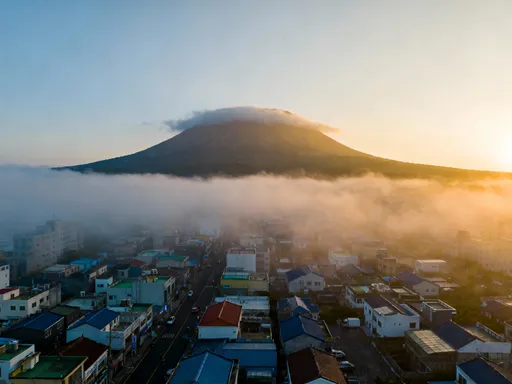
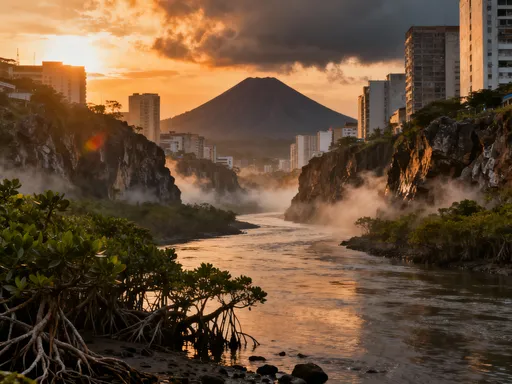
Jeju City, the island’s capital, sits in a basin between the sea and the northern slopes of Hallasan. This positioning gives it a unique geographic advantage — almost everywhere you go, the volcano looms in the distance, a constant presence. From certain vantage points, particularly in the Yeon-dong and Ara-dong neighborhoods, the city unfolds like a layered painting: low-rise buildings, winding roads, and patches of greenery all leading the eye upward to the mist-wrapped peak.
One of the most powerful experiences is watching the city wake up at dawn. Between 6 and 8 AM, the light shifts in subtle but dramatic ways. Early morning fog often drifts down from Hallasan, spilling over rooftops like slow-moving water. The streets are quiet, the air cool and still. This is when the city feels most intimate — not as a commercial center, but as a living, breathing community. Photographers who time their visits right are rewarded with soft, diffused lighting that enhances depth and texture without harsh shadows.
The hillside paths in Yeon-dong offer some of the best panoramic views. These residential trails, originally built for locals, wind through gardens and tree-lined lanes, opening up sudden vistas of the city below. From here, you can see how the urban fabric interweaves with nature — parking lots edged with wild grass, rooftops dotted with potted plants, and narrow alleys that disappear into morning haze. The eastern ridge near Jungang-ro, another elevated corridor, provides a more structured perspective, with orderly rows of buildings stretching toward the harbor.
What stands out in these compositions is the balance between human scale and natural grandeur. The buildings are modest, rarely more than five stories high, which keeps the focus on the environment rather than architecture. Hallasan, by contrast, dominates the skyline with quiet authority. It doesn’t compete with the city — it shelters it. This relationship is not just visual; it’s cultural. Hallasan is revered in Jeju’s folklore, seen as a guardian mountain. Seeing it from the city streets reinforces that sense of reverence, making the urban landscape feel protected, almost sacred.
The Harbor Glow: Photographing Jeju Port at Golden and Blue Hours
While many tourists head to coastal parks or ferry terminals, the working harbor of Jeju Port offers a more authentic and visually rich experience. This is where the island’s economy pulses — where fishing boats return with the morning catch, where cargo is loaded, and where ferries glide in and out with quiet regularity. The activity is unglamorous but deeply real, and during golden hour and blue hour, the light transforms the scene into something poetic.
The west breakwater is one of the best spots for photography. Positioned at the edge of the active port, it allows unobstructed views across the water toward the city skyline. At sunset, the western sky ignites in shades of amber and rose, reflecting off the wet docks and steel hulls. The warm glow of dockside lamps begins to flicker on, creating a contrast with the cooling tones of the sea. This interplay of warm and cool light is a goldmine for photographers, offering dynamic range and emotional depth.
Another compelling location is the perimeter of the fish market, particularly along the coastal walk near Jeju Stone Park. Here, the urban and maritime worlds collide in the most photogenic way. You’ll see stacked crates, nets hung to dry, and weathered signs in Hangul, all under the soft gradient of twilight. The reflections in tidal pools or rain-soaked pavement can double the visual impact, turning a simple scene into a mirror of light and color.
For those aiming to capture ferry silhouettes against the sunset, timing is crucial. Arrive 30 minutes before sunset to scout angles and set exposure. Use a tripod or stabilize your camera on a railing to avoid blur during longer exposures. Aim for a slightly underexposed foreground to preserve the sky’s detail — you can brighten shadows in post-processing. The key is balance: let the sky breathe without washing out the structural lines of the boats. These images don’t just document a place; they capture a rhythm — the slow, reliable pulse of island life.
Seogwipo After Dark: A Low-Key Skyline with Soul
If Jeju City feels like a quiet urban embrace, Seogwipo at night is like a whispered conversation. There’s no neon barrage, no towering skyscrapers — just a gentle glow rising from streetlamps, restaurant signs, and apartment windows. The city’s skyline is low and tiered, built into the hillsides, which gives night photography a natural sense of depth. Unlike Seoul’s overwhelming brightness, Seogwipo’s illumination feels intimate, almost respectful of the surrounding darkness.
One of the best ways to experience this is by walking the elevated paths between Cheonjiyeon and Jungang-dong. These quiet roads, often lined with trees and small shrines, climb gently into the hills, offering sudden views of the city below. From these heights, you can see how the lights cascade down toward the coast, following the contours of the land. The effect is three-dimensional — like looking into a diorama of warm, human-scale living.
The tiered layout of Seogwipo is a gift for composition. It allows photographers to layer the image: foreground trees, mid-level buildings, distant sea lights, and above them all, the starry sky. On clear nights, the Milky Way is sometimes visible above the urban outline, especially when you step just outside the densest areas. This coexistence of city and cosmos is rare in modern travel and deeply moving when captured well.
Managing light pollution is part of the challenge. While you want to include the city’s glow, you don’t want it to drown out the stars or create harsh halos. A narrow aperture (f/8 to f/11) and moderate ISO (800–1600) help maintain clarity. Use a lens with a good anti-reflective coating to minimize flare from streetlights. And consider shooting in RAW format to retain flexibility in editing. The goal isn’t perfection — it’s atmosphere. A slightly hazy streetlight, a soft blur of movement in a window, a distant ferry’s red blinker — these imperfections often carry more emotion than technical precision ever could.
Urban Nature: When City and Landscape Collide
Some of Jeju’s most powerful images come from moments when the urban and natural worlds intersect unexpectedly. A rooftop cafe in Ara-dong might offer a perfect frame of Hallasan through a glass railing. A parking garage in Dong-gu could reveal an ocean vista between concrete pillars. An overpass on the outskirts of town might align with a setting sun, turning traffic into silhouetted motion. These are not traditional landscapes — they are hybrid scenes, where human presence enhances rather than disrupts the beauty.
The inclusion of everyday elements — bikes, street signs, laundry lines, utility poles — adds scale and life. A single bicycle leaning against a wall can anchor a wide shot, giving it context and warmth. A string of drying clothes against a mountain backdrop tells a story of daily life. These details prevent the image from feeling sterile or staged. They remind us that people live here, not just visit.
What makes these compositions compelling is their honesty. They don’t hide the modern world; they integrate it. In a culture that values harmony with nature, Jeju’s urban design often reflects that ideal. Buildings are kept low, colors are muted, and green spaces are preserved. Even in dense areas, you’ll find small gardens, stone walls, and native plants woven into the streetscape. This intentional blending creates scenes that feel balanced, sustainable, and deeply human.
For travelers, these moments invite a slower way of seeing. Instead of rushing to the next attraction, you pause. You notice how light falls on a wet sidewalk after rain, how a cat naps in a sunlit doorway, how a distant peak appears between two buildings like a secret. These are the images that stay with you — not because they’re dramatic, but because they’re true. They reflect not just a place, but a way of being.
Photography Tips That Actually Work in Jeju’s Climate
Jeju’s weather is as beautiful as it is unpredictable. High humidity, sudden mist, and coastal breezes can challenge even experienced photographers. Lenses fog up, filters collect dew, and smartphone screens become unresponsive in the damp air. But with the right approach, these conditions can enhance your images rather than hinder them.
First, protect your gear. Use a microfiber cloth constantly, and keep lenses in a sealed bag when not in use. Silica gel packets in your camera bag help absorb moisture. A rain cover — even a simple plastic sleeve — can save your equipment during unexpected showers. For long walks, consider a lightweight, weather-resistant camera. Many modern mirrorless models handle humidity well, especially when paired with a protective filter on the lens.
Opt for gear that balances quality and mobility. A lightweight zoom lens (24–70mm or 18–55mm for crop sensors) offers versatility without bulk. A circular polarizer can deepen skies and reduce glare on wet surfaces, but use it carefully — over-polarization can create uneven tones in wide urban shots. Tripods are useful at dawn or dusk, but in crowded areas, a monopod or even a small beanbag can stabilize your camera on railings or walls.
Smartphones have become surprisingly capable in cityscape photography. Modern models handle low light well, and their wide-angle modes are excellent for capturing expansive views. Use the grid function to align horizons, and shoot in HDR mode during high-contrast scenes like sunrise over the harbor. For more control, switch to manual mode apps that allow you to adjust ISO, shutter speed, and focus.
When editing, aim for natural tones. Jeju’s colors are soft — sea greens, misty grays, warm wood tones — so avoid oversaturating. Slightly increasing clarity and dehazing can restore definition lost to humidity. Use graduated filters in post to balance bright skies with darker foregrounds. Most importantly, preserve the mood. If the scene felt quiet and reflective, let the edit reflect that. Authenticity resonates more than perfection.
How to Explore Responsibly While Chasing Shots
As beautiful as Jeju’s cityscapes are, they exist within living communities. Many of the best photo spots — hillside paths, quiet alleys, rooftop cafes — are part of residential or working areas. Respecting these spaces is essential. This means avoiding trespassing, minimizing noise at dawn or night, and never entering private property for a better angle.
Some travelers climb onto rooftops or peer into windows for dramatic shots, but these actions can violate privacy and damage trust. Instead, seek permission when possible. Many cafes in Ara-dong or Seogwipo offer rooftop seating with stunning views — buy a coffee, enjoy the moment, and take your photos naturally. These businesses often welcome respectful guests and may even share local tips.
Be mindful of light and sound, especially during early morning or late-night shoots. Use red-light headlamps to preserve night vision and avoid disturbing neighbors. Keep conversations quiet. If you’re using a tripod on a sidewalk, ensure it doesn’t block通行 (passage). Small courtesies go a long way in maintaining the island’s welcoming atmosphere.
Finally, support the local economy. Buy snacks from convenience stores, eat at family-run restaurants, and leave no trace. Even digital explorers have an impact — your presence, your choices, your respect shape the experience for others. Jeju’s charm lies in its quiet dignity, its balance between accessibility and preservation. By traveling mindfully, you help protect that balance.
Conclusion
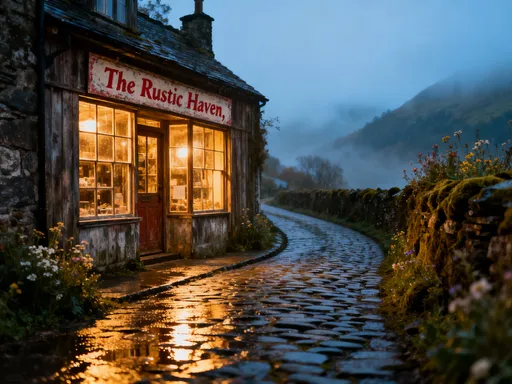
Jeju’s cityscapes taught me that magic doesn’t always shout — sometimes it whispers from a lit window on a rainy street or glows in the reflection of a puddle after dusk. These urban moments, often overlooked, are where travel memories become deeply personal. By slowing down and looking closer, you don’t just capture a place — you connect with it. So next time you visit an island like Jeju, don’t just chase the postcard views. Wander, wonder, and watch the city breathe. You might just find your favorite shot wasn’t on any map.