This Is What Happens When Architecture Meets Wilderness in Tasmania
You know that feeling when you stumble upon a building so perfectly placed, it feels like the land itself shaped it? That’s Tasmania. I arrived chasing scenery, but stayed for the architecture — raw, thoughtful, and deeply connected to its wild soul. From repurposed heritage gems to sleek modern hideaways, every structure here tells a story of resilience and design courage. This is more than a travel check-in; it’s a quiet revolution in how we build amid nature.
Arrival with a View: First Impressions of Tasmania’s Built Environment
Touching down at Hobart International Airport, visitors are greeted not by urban sprawl but by a landscape where the built environment seems to emerge organically from the earth. The island’s architectural identity begins here, in the quiet harmony between structure and terrain. Low-slung homes with sloping roofs follow the contours of rolling hills, while weathered timber and corrugated iron reflect decades of adaptation to wind, rain, and salt-laden air. These materials are not chosen for aesthetic trends but for endurance — a legacy of Tasmania’s colonial past, when settlers built with what was available and designed for survival.
Early Tasmanian architecture was shaped by isolation and necessity. Cut off from mainland supply chains, builders relied on local stone, timber, and handmade bricks. The result was a vernacular style marked by simplicity, functionality, and modest scale. Colonial cottages with thick walls and small windows were designed to retain heat during long, damp winters. Farmsteads were sited for shelter, not show. Yet within these humble forms, there is a quiet dignity — a respect for the land that didn’t seek to conquer it. This ethos continues to influence contemporary design, where architects prioritize integration over intrusion.
Today, that legacy is being reinterpreted with fresh vision. Modern homes still use timber and stone, but now they’re paired with floor-to-ceiling glass and open-plan layouts that dissolve boundaries between inside and outside. Architects are no longer just responding to the climate — they’re celebrating it. A new generation of homes features deep overhangs to shield from summer sun, elevated foundations to protect against flooding, and carefully oriented windows that capture both light and views. The rhythm of Tasmania’s architecture remains slow, deliberate, and grounded — a visual language that speaks of belonging rather than ownership.
Hobart’s Living Layers: Where Heritage and Modernity Coexist
Hobart, the island’s capital, is a living museum of architectural evolution. Its streets tell a layered story — Georgian cottages stand beside art deco facades, which in turn neighbor bold contemporary interventions. What makes Hobart unique is not the preservation of old buildings, but their thoughtful reinvention. The city does not treat heritage as something to be frozen in time, but as a foundation for innovation. This balance between reverence and progress defines its urban character.
One of the most striking examples is the transformation of the former Shot Tower in the Hunter Street precinct. Once used to produce lead ammunition by dropping molten metal from great heights, the 19th-century industrial relic has been reimagined as part of a mixed-use cultural complex. While its brick exterior remains untouched, the interior now houses creative studios, exhibition spaces, and a rooftop garden with panoramic views of the Derwent River. The project exemplifies a broader trend: adaptive reuse that honors history without replicating it. Architects are not restoring buildings to their original state — they are giving them new purpose while preserving their soul.
Another landmark of this philosophy is the revitalization of Salamanca Place, a row of sandstone warehouses built in the 1830s. Once used for storing wool, grain, and whale oil, these buildings now host galleries, restaurants, and boutique hotels. Their facades, marked by rusticated stonework and arched windows, remain unchanged, but inside, designers have introduced light-filled atriums, polished concrete floors, and custom joinery that respects the original proportions. The success of Salamanca lies in its authenticity — it feels lived-in, not staged. Locals still gather at its weekend market, and tourists wander its cobbled lanes, drawn as much by the atmosphere as by the architecture.
Local architects emphasize that this evolution is guided by a shared principle: context matters. A building should not stand out for its novelty, but for its contribution to the streetscape. In interviews, several designers described their work as “listening to the site” — considering not just the physical conditions, but the cultural and emotional history of a place. This sensitivity ensures that new developments enhance rather than overshadow the old. As one architect put it, “We’re not here to make statements. We’re here to make sense.”
Beyond the City: Rural Retreats and the Spirit of Place
Leaving Hobart behind, the architecture of rural Tasmania reveals an even deeper commitment to place. Here, buildings are not just designed to fit the landscape — they are conceived as extensions of it. Scattered across misty valleys, coastal cliffs, and forest clearings, private retreats blend into their surroundings with remarkable subtlety. These are not vacation homes in the traditional sense, but carefully crafted spaces that invite contemplation and connection.
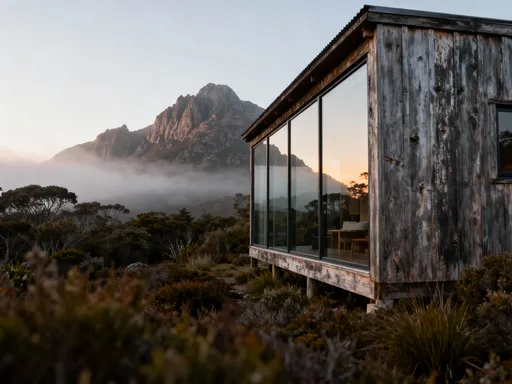
One such example is a remote cabin nestled in the Central Highlands, designed with a green roof that supports native grasses and wildflowers. From a distance, the structure appears as a low mound in the terrain, nearly invisible against the rolling hills. Inside, warm timber linings and a central wood-burning stove create a sense of shelter, while large glass panels frame views of Lake St Clair, Australia’s deepest natural lake. The owners, a couple from Melbourne, wanted a space that would “disappear when you’re not looking at it.” Their architect achieved this by sinking part of the structure into the ground and aligning its form with the natural slope of the land.
Another standout is a coastal residence on the Tasman Peninsula, where floor-to-ceiling glass walls open entirely to the sea breeze. The house is built on stilts to minimize impact on the fragile dune ecosystem, and its materials — including recycled blackbutt timber and charred cladding — were chosen to weather gracefully over time. Rather than fighting the elements, the design embraces them. Salt spray will streak the metal, wind will shape the surrounding vegetation, and the home will age like the cliffs around it. This is architecture as stewardship, not domination.
What unites these retreats is a philosophy of belonging. Architects speak of designing “for the long view” — not just in terms of vistas, but in terms of legacy. They consider how a building will age, how it will interact with wildlife, and how it will serve future generations. Many use locally sourced materials, reducing transport emissions and supporting regional industries. Some incorporate rammed earth walls or straw bale insulation, techniques that are both sustainable and deeply rooted in place. The result is a body of work that feels inevitable — as though these structures were always meant to be where they are.
Sustainable by Necessity: Eco-Design as Standard Practice
In Tasmania, sustainability is not a marketing slogan — it is a practical imperative. The island’s geographic isolation means that resources are limited, energy must be used wisely, and waste cannot be easily shipped away. These constraints have fostered a culture of innovation, where eco-conscious design is not optional, but standard. Builders and homeowners alike understand that living lightly on the land is not just an ideal — it is a necessity.
Passive solar design is widespread, with homes oriented to capture maximum winter sun while minimizing summer heat gain. Thermal mass materials like concrete and stone store warmth during the day and release it at night, reducing reliance on heating systems. Double-glazed windows, high-performance insulation, and airtight construction are now common, even in modest homes. Rainwater harvesting is standard practice, with most properties collecting water from roofs into large underground tanks. Some off-grid homes generate their own power through solar panels and small-scale wind turbines, storing energy in battery systems for use during cloudy periods.
Community-led housing projects further demonstrate this ethos. In the town of Cygnet, a group of residents developed a cohousing initiative featuring energy-efficient homes clustered around shared green space. Each house is designed to meet high environmental standards, with solar hot water, composting toilets, and greywater recycling systems. The development was planned collectively, with input from architects, ecologists, and future residents. The result is a neighborhood that prioritizes sustainability, social connection, and resilience.
Even commercial projects embrace these principles. Eco-lodges across the island have achieved certification through rigorous environmental standards, such as the EarthCheck or Green Star programs. These accommodations minimize their footprint through low-impact construction, native landscaping, and waste reduction strategies. Some use composting systems for organic waste, while others grow their own food on-site. The message is clear: tourism can thrive without compromising the natural beauty that draws visitors in the first place.
Art Meets Structure: The Role of Creativity in Public Spaces
Tasmania has a unique relationship between architecture and art — one where the line between the two often blurs. Buildings are not just functional containers; they are sculptural statements that reflect the island’s creative spirit. Nowhere is this more evident than at the Museum of Old and New Art (MONA) in Berriedale, a short drive from Hobart. Designed by Fender Katsalidis Architects, the museum emerges from the side of a sandstone quarry like a modern-day temple. Its labyrinthine interior, carved into the hillside, challenges conventional gallery layouts and creates an immersive experience that is as much about space as it is about art.
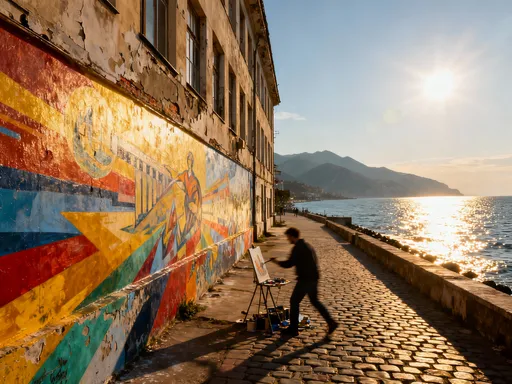
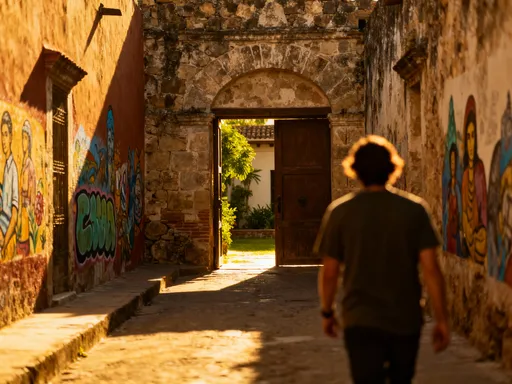
MONA’s influence extends beyond its walls. It has inspired a wave of public investment in bold, artist-driven design across the island. In small towns like Sheffield, murals cover entire buildings, transforming streets into open-air galleries. Libraries, community centers, and even ferry terminals incorporate sculptural elements and site-specific installations. In Launceston, the revitalized Cataract Gorge Visitor Centre features a curved timber roof that echoes the natural amphitheater of the surrounding cliffs. These projects are not vanity exercises — they are investments in cultural identity and community pride.
What sets Tasmania apart is that this creativity feels authentic, not imposed. Public art and architecture are developed in collaboration with local artists, craftspeople, and residents. Funding often comes from state and federal grants, but the ideas emerge from the community. This bottom-up approach ensures that designs reflect local values and stories. A sculpture in a town square might commemorate a historic industry, while a new footbridge could incorporate patterns inspired by Aboriginal weaving traditions. The result is a built environment that feels alive with meaning.
Staying the Night: Accommodations That Redefine Experience
In Tasmania, where you stay is not just a place to sleep — it is part of the journey. Accommodations are designed as experiences in themselves, where architecture shapes perception and deepens connection to place. From minimalist glass boxes in the wilderness to restored heritage homes in historic towns, each stay offers a distinct way of engaging with the island’s landscape and culture.
One unforgettable example is a stargazing cabin in the Cradle Mountain region, where the bedroom ceiling is a retractable glass panel. On clear nights, guests lie in bed watching the Milky Way stretch across the sky, undimmed by light pollution. The cabin’s design is intentionally simple — a single open space with a kitchenette, a wood stove, and a bathroom with a view of the surrounding pines. Every element serves the goal of immersion. Even the lighting is carefully calibrated to preserve night vision and minimize disruption to nocturnal wildlife.
Another remarkable stay is the restoration of a 19th-century lighthouse keeper’s cottage on Maatsuyker Island, the southernmost point of Australia accessible by foot. Reached by a challenging boat ride and a steep climb, the cottage has been meticulously renovated to retain its historic character while offering modern comfort. Thick stone walls provide insulation, original timber floors have been repaired rather than replaced, and the kitchen features period-appropriate fixtures with contemporary efficiency. Guests wake to the sound of crashing waves and the calls of seabirds, with no mobile signal and no distractions — just the rhythm of the ocean and the wind.
These accommodations share a common thread: intentionality. Architects and hosts alike understand that space influences mood, and light shapes emotion. A well-placed window can turn a meal into a meditation. A strategically oriented deck can transform a morning coffee into a ritual. By designing with these subtleties in mind, Tasmania’s lodgings offer more than comfort — they offer transformation.
Designing the Future: Challenges and Opportunities Ahead
As Tasmania’s reputation as a design destination grows, so do the challenges of balancing preservation with progress. Tourism brings economic benefits, but it also increases pressure on land, infrastructure, and housing. Some communities have expressed concern about overdevelopment, particularly in scenic areas where large, modern homes can disrupt the visual harmony of the landscape. In response, local councils have strengthened zoning regulations, limiting building heights, setbacks, and material choices in sensitive zones.
At the same time, innovative solutions are emerging. Modular and transportable homes are gaining popularity, especially among those seeking a low-impact presence in remote areas. These prefabricated structures are built in factories to high environmental standards, then shipped to site with minimal disturbance to the land. Once installed, they can be easily relocated if needed, leaving little trace behind. Some models are entirely off-grid, equipped with solar power, rainwater systems, and composting toilets. They represent a new model of responsible living — flexible, sustainable, and respectful of place.
Community engagement remains central to the island’s architectural future. In towns like Huonville and Strahan, residents are involved in planning discussions, ensuring that development aligns with local values. Architects are increasingly required to present their designs to neighborhood groups, explaining how their projects respond to context, climate, and culture. This collaborative approach fosters trust and helps prevent the kind of alienating developments that can erode a town’s character.
Tasmania’s architectural journey offers valuable lessons for other regions. It shows that innovation does not require spectacle — that the most powerful designs are often the quietest. It proves that sustainability and beauty are not mutually exclusive, and that buildings can serve both people and planet. Above all, it reminds us that architecture is not just about shelter — it is about relationship. In a world of rapid change, Tasmania stands as a testament to the enduring power of humility, care, and connection to the natural world.