You Won’t Believe What I Found in Antigua’s Hidden Urban Corners
Antigua, Guatemala isn’t just cobblestone streets and colorful buildings—it’s a living maze of urban surprises. I wandered without a map and stumbled upon secret courtyards, local art tucked in alleys, and quiet plazas pulsing with history. This isn’t just sightseeing; it’s real discovery. The city’s soul hides in its urban fabric, waiting to be felt, not just seen. Every turn reveals a moment suspended between past and present—a baker pulling fresh bread from a clay oven, a painter restoring colonial frescoes, children chasing a soccer ball down a quiet lane. In a world where travel often feels curated and predictable, Antigua reminds us that beauty still lives in the unplanned, the overlooked, the unmarked door at the end of a shadowed passageway.
The First Step: Stepping Into Antigua’s Urban Rhythm
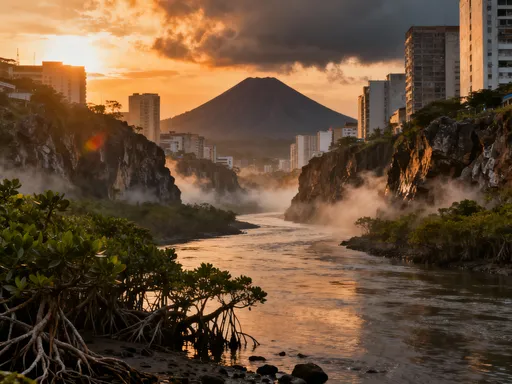
Arriving in Antigua begins long before you see its iconic bell towers. The journey typically starts with a flight into Guatemala City, a bustling metropolis where the pace is urgent and the skyline stretches endlessly. From there, a shuttle ride winds through the highlands, climbing steadily into cooler air and greener landscapes. As the capital fades behind, the terrain opens into a valley cradled by volcanoes—Agua, Acatenango, and Fuego—each playing its part in shaping Antigua’s dramatic setting. By the time travelers reach the city gates, they are already enveloped in a different rhythm, one measured not by traffic lights but by the chime of church bells and the slow arc of the sun over red-tiled roofs.
The first impression of Antigua is both ordered and organic. Its colonial grid, laid out by Spanish planners in the 16th century, gives the city a sense of structure, yet centuries of earthquakes, eruptions, and quiet evolution have softened its lines. Streets curve where walls have collapsed and been rebuilt; alleys branch unexpectedly, as if the city itself decided to leave room for surprise. The air carries a layered scent—wood smoke, ripe mangoes, and the faint mineral tang of volcanic soil. Spanish echoes from open doorways, where families gather for midday meals, and the aroma of roasting coffee drifts from small family-run molinos, where beans are ground fresh each morning.
What makes Antigua immediately accessible is its human scale. Unlike sprawling capitals or resort zones designed for mass tourism, this city was built for walking. Its compact center can be crossed in under 30 minutes, but doing so without pause would miss the point entirely. The true experience lies in slowness—in letting your footsteps fall out of sync with hurry, in allowing curiosity to guide you down a narrow lane simply because a patch of bougainvillea spills over a crumbling wall. It’s in these unplanned moments that Antigua reveals itself, not as a museum piece, but as a living, breathing urban community where history isn’t preserved behind glass but lived in the daily routines of its residents.
Beyond the Postcard: The Real Character of Antigua’s Streets
While postcards showcase Antigua’s vibrant façades and perfectly framed volcano views, the city’s deeper character emerges in the spaces between. The colonial grid, though still evident, has been reshaped by time and nature. Earthquakes in 1541, 1717, and 1976 left their mark, collapsing grand churches and forcing reconstruction that embraced irregularity. Today, this gives the city an organic flow—streets widen into small plazas without warning, alleys dead-end into private gardens, and staircases appear where you least expect them, leading up to terraced homes nestled into the hills.
At the heart of this urban tapestry is Parque Central, the city’s main square. By day, it functions as a crossroads—locals passing through on errands, children playing tag near the fountain, vendors arranging fresh fruit on woven mats. In the early evening, the mood shifts. Families gather on benches, teenagers flirt near the bandstand, and the soft hum of conversation blends with the occasional burst of mariachi music. Unlike some tourist-centric plazas that feel performative, Parque Central remains a genuine social hub, equally vital to residents and visitors. It is not a stage; it is a living room.
Equally revealing are the sidewalks, where daily life unfolds without fanfare. Schoolchildren in crisp uniforms march home in pairs, their backpacks bouncing with each step. Elderly men sip sweet coffee at outdoor tables, discussing the weather or the latest town news. Street vendors balance trays of empanadas or hand-carved wooden crosses, offering their wares with quiet dignity. These moments are not staged for photographs; they are the unscripted rhythm of urban existence. To walk through Antigua is to witness a city that welcomes attention but does not perform for it—that remains, at its core, a place where people live, work, and grow old together.
Hidden Courtyards and Forgotten Passages: Urban Secrets Uncovered
One of Antigua’s most enchanting qualities is its generosity with secrets. Behind unassuming doors and weathered archways lie spaces that time seems to have forgotten. The city is dotted with portales—covered walkways that once connected convents, monasteries, and noble homes. Many are now quiet corridors used by residents, but a few still retain their original charm, their stone columns softened by moss and shadow. Walking beneath them feels like stepping into a different century, where silence is not empty but full of memory.
Among the most moving discoveries are the ruins of old convents that now serve as unexpected sanctuaries. The Convento de las Capuchinas, for instance, once housed cloistered nuns and now hosts a tranquil garden where flowers bloom in the shadow of broken arches. Few tourists linger here for long, but those who do are rewarded with stillness—a rare commodity in even the most beautiful destinations. Similarly, the ruins of the La Merced Church, with its baroque yellow façade, conceal a courtyard where fig trees grow through cracked stone, their roots intertwining with the past.
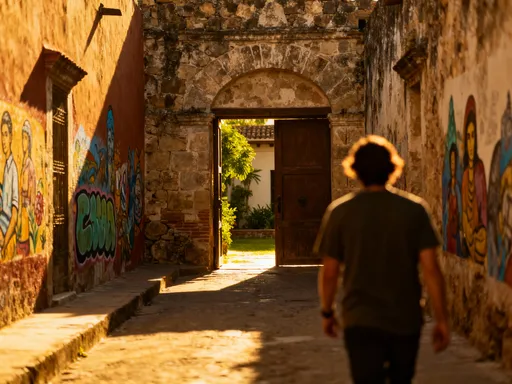
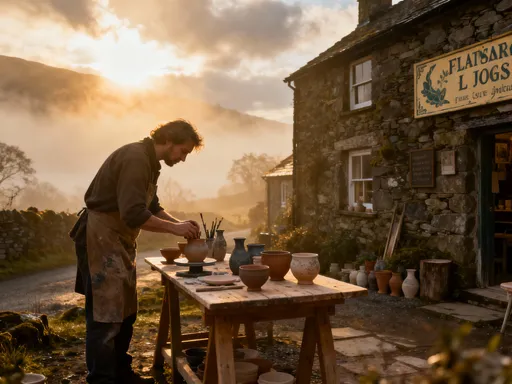
Even more surprising are the unmarked doors that lead to private worlds. One afternoon, a rusted iron gate slightly ajar revealed a family-run café tucked inside a 200-year-old courtyard. No sign, no menu board—just the scent of cinnamon and the sound of a grandmother humming as she stirred a pot of atole. Another led to a painter’s studio, where canvases leaned against sun-dappled walls, each capturing a different corner of the city in bold, earthy tones. These spaces are not designed for tourists, yet they welcome the respectful wanderer. They exist because Antigua, despite its fame, has not fully surrendered to spectacle. It still allows for the accidental, the intimate, the unplanned.
What makes these discoveries possible is the simple act of walking without a destination. GPS can guide you to landmarks, but it cannot point you toward the child waving from a second-floor balcony or the stray dog napping in a patch of sunlight. It cannot tell you when to pause, when to look up, when to turn down a lane simply because the light falls beautifully on the cobblestones. In Antigua, the map is less important than the moment. The city rewards those who move slowly, who listen more than they speak, who understand that discovery is not about finding what you expected, but about being open to what you never knew existed.
Art in the Alleyways: Street Creativity Shaping Urban Identity
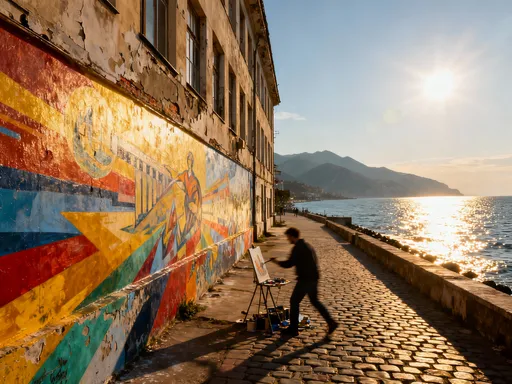
Antigua’s walls are not silent. Across its streets, art speaks in color, texture, and story. Unlike graffiti born of rebellion or neglect, much of the city’s street art reflects a deep sense of cultural pride and continuity. Murals depict Mayan cosmology, colonial history, and environmental messages, often painted by local artists committed to preserving identity in the face of globalization. One striking example lies near Calle de los Duendes, where a full-wall painting shows a jaguar emerging from a volcanic landscape, its eyes glowing with ancestral wisdom. This is not vandalism—it is visual storytelling, a way of anchoring the present to the past.
Equally vibrant are the temporary art spaces that appear on sidewalks and in vacant lots. Artisans set up folding tables to display handwoven textiles, each pattern telling a story of a specific village or tradition. Potters sell clay vessels shaped the same way they have been for generations, their surfaces burnished to a soft sheen. Some of these pop-up studios are run by young artists experimenting with fusion—blending traditional motifs with contemporary design. A scarf might feature ancient glyphs reimagined in neon thread; a ceramic plate might combine pre-Hispanic symbols with modern glazing techniques. These creations are not souvenirs in the disposable sense; they are heirlooms in the making, objects meant to be lived with and passed down.
Public art also plays a role in reclaiming neglected spaces. A once-dull alleyway near 5a Avenida Sur has been transformed by a series of murals painted during a community festival. Now, it pulses with life—children point out animals hidden in the designs, couples take photos beneath floral arches, and visitors pause to read the small plaques explaining the symbolism. These projects do more than beautify; they create shared ownership. When a wall becomes a canvas for collective memory, it ceases to be mere infrastructure and becomes part of the city’s emotional landscape.
For the observant traveler, these artistic expressions are not distractions from the main sights—they are the main sights. They reveal a city that values creativity not as a luxury but as a necessity, a way of making meaning in a world that often feels chaotic. To walk through Antigua’s alleyways is to witness a living dialogue between artist and environment, between tradition and innovation, between the individual and the community. The art does not shout; it invites. It asks you to look closer, to listen, to remember that beauty can grow in the most unexpected places.
Cafés, Corners, and Community: Where Urban Life Breathes
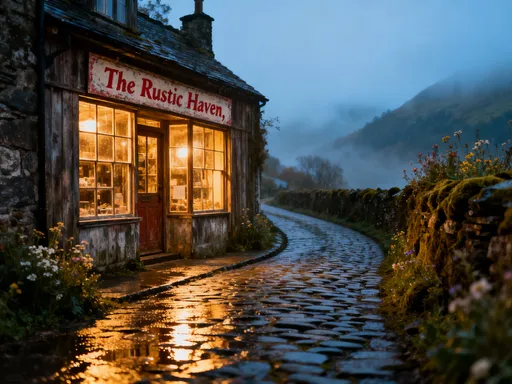
If Antigua has a heartbeat, it can be found in its independent cafés. These are not chain outlets with standardized menus, but small, soulful spaces born from renovation and reinvention. Old colonial homes, once abandoned or used for storage, have been transformed into cozy coffee houses with wooden beams, tile floors, and walls thick enough to muffle the outside world. Inside, the air is rich with the scent of Guatemalan beans—dark, smoky, and slightly sweet—roasted locally and brewed with care.
One such café, tucked behind the market on 2a Calle Poniente, occupies what was once a convent’s storage room. Today, it hosts a morning crowd of digital nomads, local students, and retired expats who have made Antigua their home. The owner, a Guatemalan woman in her fifties, greets each guest by name, offering recommendations based on mood rather than menu. Her husband bakes conchas and banana bread in a clay oven out back, the same way his mother did in the highlands. This is not just a business; it is an extension of family, of hospitality, of place.
Similar transformations can be found throughout the city. A former schoolhouse now houses a bookshop with a reading nook and weekly poetry readings. A crumbling warehouse on 7a Avenida Norte has been converted into a bakery that employs single mothers from nearby villages, offering them stable income and childcare support. These spaces do more than serve coffee or sell books—they create connection. They are where locals meet to discuss town affairs, where travelers exchange stories, where ideas are born over steaming mugs.
What makes these spots essential to Antigua’s urban soul is their role as anchors. In a city increasingly shaped by tourism, they remain grounded in community. They do not exist to impress Instagram feeds but to serve real needs—warmth, conversation, sustenance. They are places where time slows, where a cup of coffee can last an hour, where silence is not awkward but welcome. For the visitor, spending time in such spaces is not passive observation; it is participation. It is a way of honoring the city not as a postcard, but as a living, evolving entity shaped by the people who call it home.
Walking the Line: Balancing Tourism and Authentic Urban Space
Antigua’s popularity is undeniable. Each year, tens of thousands of visitors arrive to study Spanish, hike volcanoes, or simply soak in the city’s charm. This influx brings undeniable benefits—economic opportunity, cultural exchange, renewed interest in preservation. But it also poses challenges. In the busiest zones, like the market near 5a Calle Poniente or the stretch of shops around Parque Central, the balance sometimes tips too far toward commerce. Sidewalks narrow under the weight of souvenir stalls, and the morning quiet is replaced by the buzz of tour groups and selfie sticks.
Yet, just a few blocks away, life continues as it always has. Residential areas like Santa Barbara or San Miguel remain largely untouched by mass tourism. Here, clothes dry on lines strung between balconies, roosters crow at dawn, and neighbors greet each other by name. The contrast is not accidental—it is the result of deliberate efforts to preserve Antigua’s dual identity as both a destination and a home. City planners, local leaders, and residents have worked together to implement traffic restrictions, waste management programs, and heritage conservation initiatives that protect the city’s integrity without shutting out visitors.
One of the most effective strategies has been the promotion of respectful exploration. Signs in multiple languages encourage quiet after 9 p.m., remind tourists not to enter private courtyards without permission, and ask visitors to support local businesses rather than international chains. Schools host cultural exchange programs where travelers can learn traditional cooking or weaving, fostering mutual understanding. These efforts reflect a broader philosophy: that tourism should enrich a place, not consume it.
For the traveler, this means adopting a mindset of humility and presence. It means understanding that Antigua is not a stage set but a lived-in city. It means choosing to visit during shoulder hours, when the light is soft and the streets are quiet. It means smiling at a vendor without buying anything, or pausing to let an elder cross the street first. These small acts of respect do more than avoid offense—they build bridges. They allow the visitor to move through the city not as a spectator, but as a guest, one who leaves not just footprints, but gratitude.
Why Antigua’s Urban Soul Matters—And How to Experience It Right
At a time when many destinations feel increasingly homogenized—where every old town looks the same, every café serves the same flat white, every souvenir stall offers the same mass-produced trinkets—Antigua stands apart. Its value lies not in perfection, but in authenticity. It is a city that bears its scars openly, where broken arches are not hidden but celebrated, where history is not polished but preserved in its raw, honest form. To walk its streets is to engage with a place that refuses to be reduced to a checklist of attractions.
The deeper meaning of Antigua lies in its everyday spaces—in the way sunlight filters through a courtyard vine, in the sound of a blacksmith shaping metal in a back alley, in the shared silence between strangers on a park bench. These are not moments to be captured and posted; they are to be felt, remembered, carried forward. They remind us that travel, at its best, is not about accumulation, but about transformation. It is about allowing a place to change how we see, how we listen, how we move through the world.
To experience Antigua fully, one must go slow. Visit in the early morning, when the city is still waking and the air is crisp. Walk without a schedule. Talk to locals—not just vendors, but the woman sweeping her doorstep, the man fixing a bicycle, the child offering a drawing in exchange for a kind word. Learn a few phrases in Spanish; even a simple buenos días opens doors. Avoid the busiest days, especially when cruise groups arrive. Instead, choose a quiet Tuesday or Wednesday, when the rhythm of the city belongs to those who live it.
And above all, be present. Put the phone away. Let your eyes adjust to the details—the crack in a wall where a flower grows, the pattern of tiles beneath your feet, the way a shadow moves across a plaza as the sun climbs. True discovery is not about seeing more; it is about seeing differently. Antigua does not give up its secrets to those who rush. It rewards those who linger, who listen, who understand that the soul of a city is not in its monuments, but in its moments.