Medellín’s Street Flavors: Where Food Meets Art in Every Bite
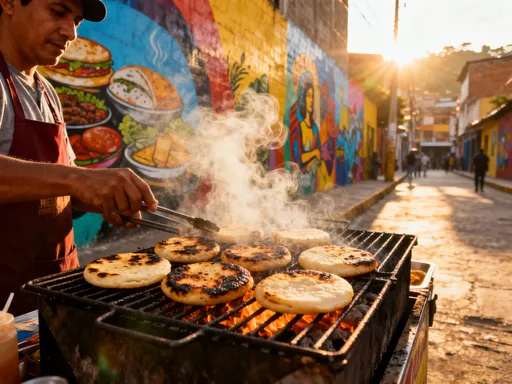
You know that feeling when a city surprises you? Medellín did that to me. Beyond the sleek metro and mountain views, I found something real—corn on every corner, vibrant murals above sizzling grills, and people turning food into art. This isn’t just eating; it’s culture on a plate. From arepas slapped fresh off the comal to bandeja paisa served like a canvas, every meal tells a story. Let me take you where flavor dances with creativity, where the rhythm of the streets is matched only by the sizzle of oil in a pan and the laughter that rises from shared tables. In Medellín, food is not a side note—it is the main melody.
First Impressions: A City Reborn Through Culture
Arriving in Medellín, the first thing you notice is not the weather—though the eternal spring climate is a gift—but the atmosphere. There’s a lightness in the air, a sense of movement and purpose. The city unfolds in layers: terraced hillsides dotted with homes, clean metro lines gliding above traffic, and public spaces alive with music, dance, and color. This is not the Medellín of decades past, shaped by hardship and headlines. This is a city reborn, not through grand corporate developments, but through the quiet, persistent work of its people.
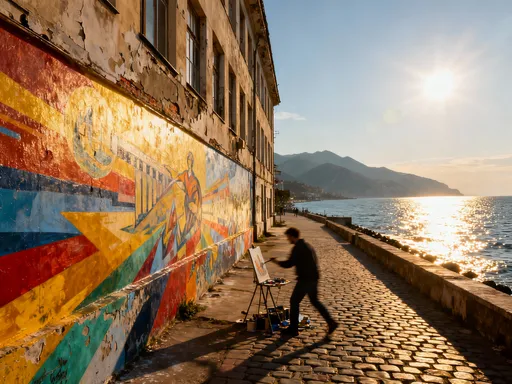
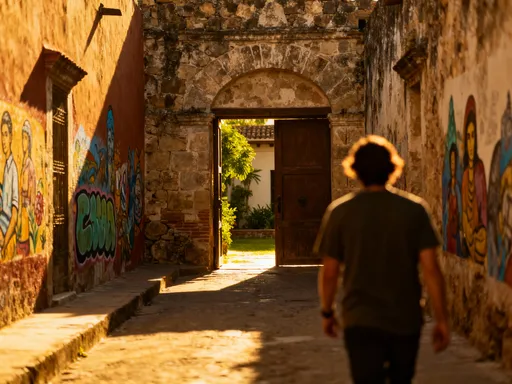
The transformation is most visible in the way art and daily life intertwine. Murals cover entire building facades, not as tourist attractions, but as community declarations. A grandmother walks her grandchild to school beneath a painting of blooming orchids; a street musician plays near a wall adorned with portraits of local heroes. These are not isolated gestures. They are threads in a larger tapestry of renewal, where public expression is not a luxury, but a necessity. The city’s healing has been rooted in giving voice to neighborhoods long overlooked, and food has played a central role in that reclamation.
In parks and plazas, communal meals are common. On weekends, families gather with steaming pots of ajiaco, sharing spoons and stories. Vendors sell buñuelos from wooden carts, their golden crusts glistening in the sun. These moments are not staged for visitors. They are lived experiences, expressions of pride and resilience. The food is simple, often humble, but it carries weight—of memory, of identity, of survival. In Medellín, a meal is never just about sustenance. It is an act of belonging.
The Pulse of the Neighborhood: Communa 13’s Culinary Rhythm
No place embodies Medellín’s transformation more powerfully than Communa 13. Once known for violence and isolation, this neighborhood now pulses with creative energy. The journey upward—via escaleras eléctricas, the outdoor escalators that climb the steep hills—feels symbolic. With each step, the sounds change: from distant traffic to the beat of drum circles, from silence to the rhythmic shouts of dance instructors teaching salsa in open courtyards.
Street art here is not decoration. It is testimony. Murals depict historical events, lost loved ones, and visions of peace. A child points to a painting of a dove emerging from a rifle barrel, then runs to a nearby stall for a warm empanada de carne. The vendor, a woman in her fifties with flour-dusted hands, smiles as she folds the dough. “This recipe?” she says. “My mother taught me. We’ve sold here for thirty years.” Her stall is small, but its colors match the mural behind her—yellow, red, green. Food and art exist in dialogue.
The culinary rhythm of Communa 13 is steady and authentic. Churros are fried to order, dusted with cinnamon sugar, served in paper cones. A man grills choripanes—chorizo sandwiches—on a portable stove, the smoke curling into the afternoon light. These are not “fusion” dishes designed for Instagram. They are rooted in generations of tradition, adapted to the realities of street life. Each bite carries the flavor of resilience. To eat here is to participate in a story of renewal, one shaped not by outsiders, but by those who live it every day.
And yet, there is joy—unmistakable, infectious joy. Teenagers dance on the plaza while elders sip lulada, a refreshing drink made from lulo fruit, panela, and lime. A local guide explains how the community turned pain into expression, using art and food as tools of resistance and healing. “We feed each other,” he says simply. “That’s how we survive. That’s how we thrive.”
Markets as Living Galleries: The Sensory World of Mercado del Río
If Communa 13 shows the soul of Medellín’s streets, Mercado del Río reveals its evolving identity. Housed in a renovated riverside complex, this is not a traditional market. It is a curated space where tradition meets innovation, where the past is honored but not preserved behind glass. On any given evening, the air hums with conversation, the clink of glasses, and the soft strum of a guitar from a corner stage.
Rows of stalls offer everything from slow-cooked mondongo to artisanal cheeses from Antioquia’s countryside. A chef in a crisp white apron flips arepas de choclo on a wide griddle, the sweet corn batter bubbling at the edges. Nearby, a young couple samples trucha frita—freshwater trout—paired with a glass of local craft beer. The design is modern—exposed steel beams, hanging plants, ambient lighting—but the spirit is deeply rooted. This is a place for tasting, yes, but also for seeing, hearing, and feeling what contemporary Medellín is becoming.
What makes Mercado del Río special is its balance. Gourmet vendors sit beside grandmothers selling homemade lechona, a stuffed pork dish slow-roasted for hours. The smells are intoxicating: cumin, garlic, grilled beef, ripe mango. A child presses her nose against a glass case filled with alfajores, delicate cookies sandwiched with dulce de leche. A group of friends shares a platter of antioqueño cheese, drizzled with honey, laughing as they debate which stall makes the best guarapo, a fermented sugarcane drink.
This market is more than a dining destination. It is a social laboratory, a space where different generations and classes gather on equal ground. A businessman in a suit eats beside a student with a backpack. Tourists ask locals for recommendations, and the answer is always generous. “Try the sancocho,” someone says. “It’s like medicine for the soul.” In this place, food is the common language, and the market is the stage where culture performs in real time.
Flavors with History: The Story Behind Bandeja Paisa
No exploration of Medellín’s culinary artistry is complete without the bandeja paisa, a dish so iconic it has become a symbol of regional pride. Served on a wide oval platter, it is a landscape of flavor: red beans slow-simmered with pork, white rice, ground beef, chicharrón (crispy pork belly), a fried egg, ripe plantain, avocado, and arepa. At first glance, it may seem excessive. But each component has a story, a reason for being there.
The dish originated with the antioqueños, the farmers and miners of the region, who needed hearty, sustaining meals to power long days in the fields. The beans provided protein and fiber, the rice and arepa offered carbohydrates, the meat delivered energy, and the plantain added sweetness and texture. Nothing was wasted. Every ingredient served a purpose. Over time, the bandeja paisa evolved from necessity to celebration, from fuel to feast.
Today, it is more than a meal—it is heritage on a plate. In family-run restaurants across the city, the preparation is treated with reverence. One such place, tucked into a quiet neighborhood, is run by three generations of women. The grandmother stirs the beans in a massive pot, adding a pinch of oregano and a strip of pork rind for depth. Her daughter shapes the arepas by hand, her fingers moving with practiced ease. The granddaughter takes orders, explaining the dish to curious visitors with quiet pride.
“We don’t rush,” the grandmother says. “Good food takes time. Like a painting, you can’t hurry the details.” In her kitchen, the stove is the easel, the spices the palette. The dining room is the gallery, where guests don’t just eat—they witness. To sit at that table is to understand that tradition is not static. It is lived, shared, and passed down, one careful step at a time. The bandeja paisa is not just a dish. It is a legacy.
Street Art and Street Eats: A Match Made in Medellín
In Medellín, art and food do not merely coexist—they collaborate. Walk through any neighborhood, and you’ll see the connection. A mural of a farmer harvesting coffee beans overlooks a stall selling tinto in small plastic cups. A colorful depiction of a market scene frames a woman frying arepas on a comal. These are not coincidences. They are reflections of a culture where creativity and nourishment spring from the same source: the street.
Consider a quiet corner in El Poblado, where a large mural shows a woman grinding maize with a stone metate. Her face is serious, focused. Below her, a vendor sells tamales wrapped in banana leaves. When asked about the connection, he smiles. “She’s my great-aunt,” he says. “The painting is by a local artist. He came, watched me work, and said, ‘Your food is art. Let me show it.’” Now, customers pause not just to buy, but to look, to remember.
This synergy is not manufactured. It grows naturally from a city where expression has long been a form of survival. Artists paint to be seen. Vendors cook to feed. Both work with limited resources, turning scarcity into beauty. A discarded wall becomes a canvas. Leftover plantains become plátano frito. In both cases, the result is transformation.
Tourists often come for the murals. But they stay for the jugos naturales, the fresh juices blended with guanabana, maracuyá, or mango. They sit on benches, sipping from tall glasses, their eyes moving from wall to plate and back again. The experience is holistic. You cannot separate the visual from the gustatory. In Medellín, to see the city is to taste it, and to taste it is to understand it.
The Ritual of Coffee and Conversation: From Farm to Urban Café
No discussion of Medellín’s culture is complete without coffee. Colombia is famous for its beans, but in this city, the ritual goes beyond the brew. It is in the pause, the moment of connection. In cozy cafés tucked into side streets, the pace slows. Baristas—often young, passionate, and deeply knowledgeable—serve cups of tinto or chocolate santafereño, a rich, spiced hot chocolate served with cheese for dipping.
One café in Laureles stands out. The walls are lined with sacks of beans labeled by region—Huila, Nariño, Cauca. A chalkboard lists tasting notes: “floral,” “cocoa,” “citrus.” But this is not a pretentious space. It is warm, inviting. The owner, a former coffee farmer, speaks proudly of his roots. “We don’t just grow coffee,” he says. “We grow stories. Every cup has a journey.” He offers a tasting flight, three small cups with different roasts. The first is bright and acidic, the second nutty and smooth, the third deep and earthy.
As customers sip, conversations unfold. A woman reads a book between sips. Two friends catch up, their laughter blending with the soft jazz in the background. A traveler asks about the best way to visit a coffee farm. The barista recommends a community-run tour in nearby Jericó, where families welcome visitors into their homes and fields. “You don’t just see the process,” she says. “You live it.”
There is a quiet artistry in coffee-making, much like painting. The roasting, the grinding, the pouring—each step requires attention, care, intention. In Medellín, this ritual is not rushed. It is honored. And in that honoring, something deeper emerges: a sense of presence, of connection, of being fully in the moment. A cup of coffee becomes more than a drink. It becomes a bridge.
How to Taste Medellín Like a Local: Practical Moments That Matter
To truly experience Medellín, you don’t need a five-star restaurant or a guided gourmet tour. You need presence. You need to slow down, to sit on a step, to accept a cup of guarapo from a stranger. The city reveals itself in small, unscripted moments. A vendor offers you a bite of arepa de queso, still warm from the grill. You try it, smile, and suddenly you’re part of the scene.
Timing matters. Visit a neighborhood plaza in the late afternoon, when families begin to gather. That’s when the empanada vendors set up, when the smell of frying dough fills the air. Look for the stalls with a line—locals know best. Watch how the vendor works: the rhythm of flipping, the careful pressing of the seam. These are signs of care, of pride.
Don’t be afraid to point, to smile, to say “uno, por favor.” Most vendors speak enough English to communicate basics, and gestures go a long way. If you’re unsure, follow someone who looks like they belong. A woman in a market picking up a bag of yuca? She probably knows where the best buñuelos are. A man buying two cups of tinto? He might share one with you if you ask.
Sharing food builds trust. In Medellín, this is not just a nice idea—it is a way of life. At a communal table in a fonda, you might sit beside a nurse, a student, a retiree. You’ll likely end up passing plates, offering bites, laughing over spilled juice. These are the moments that stay with you. Not the perfect photo, but the imperfect, joyful exchange.
And when you leave, you’ll carry more than memories. You’ll carry a deeper understanding of what it means to be nourished—not just by food, but by connection, by community, by the simple act of being seen and welcomed.
Medellín taught me that culture doesn’t live in museums—it thrives in kitchens, alleys, and open-air tables. The art isn’t just on the walls; it’s in the way people serve, share, and savor. To eat here is to understand resilience, joy, and beauty in motion. This city doesn’t just feed you—it speaks to you, one bite at a time.