You Won’t Believe What I Discovered in Normandy’s Wild Landscapes
Normandy isn’t just about history and hedgerows—it’s a land of raw, untouched natural beauty. I went searching for serenity in its cliffs, dunes, and marshlands, only to stumble into some unexpected traps. From misleading trails to weather shocks, I learned the hard way. If you're chasing nature here, let me save you the heartache—and show you what truly makes it magical. What I found wasn't just scenic vistas or quiet trails, but a deeper kind of peace—one that comes from being truly present in a landscape shaped by wind, water, and time. This is not a region to rush through. It's one to feel, to listen to, to respect. And with the right preparation, it can offer moments of profound stillness few places in Western Europe still provide.
The Allure of Normandy’s Natural Side
Normandy is often celebrated for its pivotal role in history and its charming half-timbered villages, but beyond these well-trodden narratives lies a region pulsing with wild, unscripted beauty. It is a land where nature unfolds in layers—where chalk cliffs crumble into the sea, where dunes shift with the seasons, and where marshlands breathe with the rhythm of tides. For those willing to look past the postcard-perfect towns of Honfleur and Bayeux, Normandy reveals itself as a sanctuary of biodiversity and quiet wonder. The region spans a mosaic of ecosystems, from the windswept headlands of the Cotentin Peninsula to the lush river valleys of the Orne and the Seine, each supporting distinct flora and fauna.
The Alabaster Coast, stretching from Le Havre to Étretat, is perhaps the most iconic of these natural wonders. Here, towering white cliffs rise dramatically from the English Channel, sculpted by centuries of erosion into arches, caves, and needle-like formations. At sunrise, the light catches the chalk face in soft pinks and golds, transforming the stone into something almost ethereal. In spring, the cliff tops burst with sea thrift, wild thyme, and yellow horned poppies, while fulmars and peregrine falcons circle above. It’s a place that feels both ancient and alive, where every gust of wind carries the scent of salt and blooming heather.
Equally captivating are the inland landscapes. The Pays d’Auge, known for its apple orchards and calvados production, is a patchwork of hedgerows, meadows, and rolling hills. But beyond the pastoral charm lies a subtler beauty—the rustle of rabbits in tall grass, the call of skylarks overhead, the dappled light filtering through ancient beech trees. This bocage countryside, once shaped by centuries of farming, now offers refuge to deer, badgers, and even the occasional fox. Similarly, the wetlands of the Cotentin Peninsula—particularly in the Réserve Naturelle Nationale des Marais du Cotentin et du Bessin—host thousands of migratory birds each year. In autumn, flocks of pink-footed geese descend on the marshes, their calls echoing across the misty flats at dawn.
What makes Normandy’s natural appeal so unique is the contrast between its wildness and accessibility. Unlike more remote regions of France, Normandy’s landscapes are within reach of day-trippers and families, yet they retain a sense of solitude and authenticity. There is no need to trek deep into wilderness to find peace—just a willingness to step off the main roads and follow a footpath through the dunes or along a riverbank. For nature lovers, this balance is rare and precious. It offers not just scenic beauty, but a chance to reconnect with the quiet pulse of the natural world.
Pitfall #1: Overestimating Accessibility
One of the most common misconceptions among travelers is that Normandy’s scenic spots are easy to reach. While some destinations like Mont-Saint-Michel or Étretat are well-marked and frequented, many of the region’s most beautiful natural areas require careful planning and local knowledge. The reality is that public transportation in rural Normandy is limited, and even with a car, navigation can be surprisingly tricky. Trailheads are not always clearly signed, and GPS systems often mislead visitors onto narrow farm lanes or dead-end roads that are unsuitable for larger vehicles.
Take Cap de la Hague, for example, a windswept headland in the far west of the Cotentin Peninsula. Its rugged cliffs and sweeping ocean views are breathtaking, but reaching the best vantage points involves a series of unmarked turns and unpaved tracks. Without a detailed regional map or local guidance, it’s easy to end up lost in a maze of hedgerows with no signal and little hope of quick assistance. Similarly, the dunes of Le Hourdel, nestled along the Baie de Somme, are accessible only by a long walk from the nearest parking area, and signage is minimal. Visitors expecting a quick stop may find themselves unprepared for the distance and terrain.
The solution lies in preparation. Renting a car with good ground clearance is often the most reliable way to explore Normandy’s natural sites, especially in more remote areas. Before setting out, it’s wise to consult official regional tourism maps, which are more accurate than digital navigation apps in rural zones. Many local tourist offices provide free printed maps that include footpath networks, parking areas, and points of interest. Additionally, checking bus schedules in advance can help when visiting towns like Barfleur or Granville, where parking is restricted and public transport, though infrequent, does operate on key routes.
Another often-overlooked factor is trail access. Some paths, particularly in protected areas, are closed during certain seasons to protect nesting birds or fragile vegetation. Ignoring these restrictions not only risks fines but also damages delicate ecosystems. By taking the time to research access points, verify opening times, and plan routes in advance, travelers can avoid frustration and ensure a smoother, more rewarding experience. The goal is not to discourage exploration, but to encourage thoughtful, informed travel that respects both the landscape and the local communities that steward it.
Pitfall #2: Underestimating the Weather
Normandy’s beauty is inseparable from its weather, yet this is also where many visitors are caught off guard. The region’s maritime climate brings rapid shifts in conditions—sunshine can give way to dense fog or sudden downpours within minutes. I learned this the hard way during a hike along the cliffs near Fécamp. I set out under clear skies, wearing a light jacket, only to be caught in a cold coastal squall that rolled in without warning. Within ten minutes, visibility dropped to less than fifty meters, the wind howled through the gullies, and rain turned the path into a slippery mud track. What had begun as a peaceful walk became a test of endurance.
This unpredictability is not a flaw, but a defining feature of Normandy’s natural character. The weather shapes the landscape in profound ways—the salt-laden winds prune trees into sculptural forms, the frequent rain nourishes lush meadows, and the fog lends an almost mystical quality to the marshlands at dawn. For photographers and nature lovers, these conditions can create stunning moments: a beam of light breaking through cloud cover, mist clinging to reeds in a tidal flat, or rain-washed cliffs glowing in soft afternoon light. But without proper preparation, such moments can quickly turn uncomfortable or even dangerous.
The key is layering. Normandy is not a place for minimalist packing. A waterproof jacket with a hood, moisture-wicking base layers, and a warm mid-layer like a fleece or down vest are essential, regardless of the season. Sturdy, waterproof hiking boots with good grip are equally important, especially on coastal paths where rocks can be slick with seaweed or algae. A compact umbrella or packable rain cover for your day bag can make a significant difference during unexpected showers.
Equally crucial is checking the forecast before heading out. While international weather apps can be unreliable in rural areas, Météo-France, the national meteorological service, provides accurate, location-specific updates. Paying attention to wind speed, precipitation probability, and tide times can prevent unpleasant surprises. For coastal walks, it’s especially important to note tide schedules, as rising waters can cut off access to certain paths or make return routes impassable. By respecting the weather—not fighting it—travelers can not only stay safe but also enhance their experience, capturing the ever-changing moods of Normandy’s landscapes in all their raw authenticity.
Pitfall #3: Chasing Crowds Instead of Solitude
One of the greatest threats to the tranquility of Normandy’s natural sites is overtourism. Iconic locations like Mont-Saint-Michel Bay and the cliffs of Étretat attract tens of thousands of visitors each year, especially during peak summer months. While these places are undeniably beautiful, the sheer volume of people can diminish the experience—paths become crowded, viewpoints are congested, and the natural soundscape is drowned out by chatter and camera shutters. In some areas, the environmental impact is visible: trampled vegetation, litter, and erosion from foot traffic.
The temptation to follow the crowds is understandable. These sites are famous for a reason, and there’s a certain satisfaction in ticking them off a bucket list. But for those seeking genuine connection with nature, the reward often lies in stepping away from the beaten path. Solitude is not just a luxury; it’s a necessity for truly experiencing the quiet magic of a landscape. When you’re alone on a dune at sunrise, or listening to the lap of waves in an empty marsh, the sense of immersion is complete.
Fortunately, Normandy offers numerous alternatives that provide equal beauty with far fewer visitors. The Baie de Somme, straddling the border between Normandy and Hauts-de-France, is one such gem. Its wide tidal flats, salt marshes, and sand dunes are home to seals, herons, and thousands of migratory birds. Unlike Mont-Saint-Michel, it remains relatively uncrowded, especially in the early morning or during the shoulder seasons. The forests of Cerisy, one of the last remnants of ancient woodland in northern France, offer another peaceful retreat. With over 1,000 hectares of beech, oak, and chestnut trees, it’s a haven for hikers, birdwatchers, and those seeking shade and stillness.
Another overlooked destination is the marshland near Saint-Lô, part of the Vallée de la Vire. Here, slow-moving rivers meander through grassy wetlands, and wooden footbridges lead through reed beds alive with dragonflies and warblers. Visiting early in the day or during spring and autumn can dramatically reduce the number of people you encounter. The key is to shift the mindset from seeing as much as possible to experiencing a few places deeply. By choosing less-visited sites and traveling during off-peak times, visitors not only gain peace but also help reduce pressure on fragile ecosystems.
Choosing the Right Time and Season
The timing of your visit can transform your experience of Normandy’s natural landscapes. Each season brings its own palette of colors, light, and wildlife, offering distinct reasons to explore. Spring, from April to early June, is a time of renewal. Meadows bloom with cowslips, orchids, and daisies, and newborn lambs dot the pastures. The air is fresh, temperatures are mild, and migratory birds return to the wetlands in large numbers. This is an ideal time for walking, with long daylight hours and fewer tourists than in summer.
Summer, while popular, comes with trade-offs. The days are long and warm, perfect for beachcombing or picnicking in the dunes, but popular sites become crowded, and the humidity can make inland hikes uncomfortable. That said, early summer—particularly June—offers a sweet spot with good weather and manageable visitor numbers. Coastal fog, known locally as “cote grise,” is more common in summer, sometimes obscuring views but adding a dreamlike quality to the cliffs and shorelines.
Autumn, from September to November, is arguably the most rewarding season for nature lovers. The light takes on a golden hue, casting long shadows across the fields and forests. The foliage in the Suisse Normande—a hilly area along the Orne River—turns rich shades of amber and crimson, creating a landscape that feels more like New England than northern France. Birdwatching peaks during this time as flocks gather before migration. Fewer tourists mean quieter trails and more intimate encounters with nature.
Winter, though colder and darker, has its own stark beauty. The region’s marshes freeze in patches, and frost coats the reeds in silver. While daylight is limited, the dramatic skies and storm-washed cliffs offer powerful photo opportunities. Winter is also the best time to see certain species, such as whooper swans and Bewick’s swans, which winter in the wetlands. For those who don’t mind the chill, a winter walk along an empty beach or through a snow-dusted forest can be profoundly peaceful. Regardless of the season, checking tide tables is essential for coastal visits, as low tide reveals tidal pools and sandbars, while high tide can isolate entire sections of beach.
Hidden Gems Done Right
For travelers willing to venture beyond the guidebooks, Normandy offers a handful of under-the-radar destinations that deliver exceptional natural beauty and solitude. One such place is the dunes of Le Hourdel, located on the northern edge of the Baie de Somme. Unlike the more famous dunes of neighboring Le Crotoy, Le Hourdel remains largely undiscovered. Here, marram grass waves in the wind, and the only sounds are the cry of oystercatchers and the distant roll of waves. The dunes rise and fall like frozen waves, offering panoramic views of the bay and the Channel beyond. Walking here feels like stepping into a forgotten corner of the coast, where nature reclaims the space from human presence.
Another hidden treasure is the orchard country of Suisse Normande. Nestled in the southern part of the region, this hilly terrain is dotted with old apple and pear trees, many of which are centuries old. In bloom, the orchards are a sea of white and pink blossoms; in autumn, the ground is carpeted with fallen fruit, and the air carries the sweet, fermented scent of ripening apples. This is calvados country, where small producers still press cider and age brandy in oak barrels. Visiting a local farm or joining a guided orchard walk offers a sensory-rich experience that connects the landscape to tradition and taste.
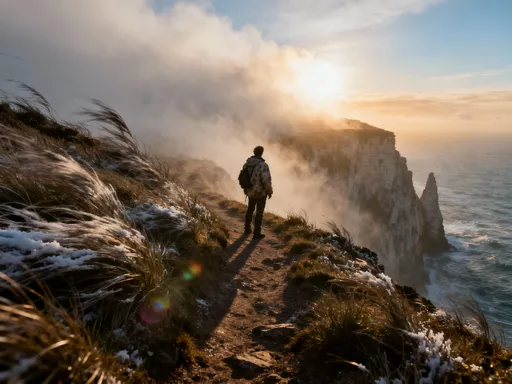
Finally, the cliffs of Cap Fagnet, near the village of Varenguebec, offer one of the most dramatic yet least-visited coastal vistas in Normandy. Jutting into the Channel, this promontory provides sweeping views of the sea and the surrounding coastline. Unlike Étretat, there are no crowds, no gift shops, no barriers—just wind, waves, and silence. The path to the cliff edge is simple but unmarked, and the experience is all the more powerful for its rawness. To visit these places responsibly, it’s essential to stay on designated trails, avoid disturbing wildlife, and carry out all trash. These sites are not just scenic backdrops; they are living ecosystems that thrive when treated with care.
Putting It All Together: A Smarter Nature Journey
Exploring Normandy’s wild landscapes is not about checking off famous sites or capturing the perfect photo. It’s about slowing down, tuning in, and allowing the land to speak. The lessons learned—from planning access and respecting the weather to avoiding crowds and choosing the right season—all point to a single truth: the best experiences come from intention, not impulse. A smarter nature journey is one that values preparation, mindfulness, and respect for the environment.
By approaching travel as an act of presence rather than consumption, visitors open themselves to moments of unexpected beauty—a deer stepping from the trees, a rainbow over the marshes, the silence of a fog-shrouded cliff. These are not just sights to see, but feelings to carry. Normandy’s wild places offer more than scenery; they offer connection, calm, and a reminder of the enduring power of nature.
As you plan your journey, let curiosity guide you, but let responsibility anchor you. Choose lesser-known paths, travel in the quiet hours, and leave no trace. In doing so, you preserve not only the landscape but the possibility of wonder for those who follow. Normandy’s wild heart beats softly, but it beats true—for those who know how to listen.